
Pittman’s Pocket: HBCU Pipeline Report | The CFL Route
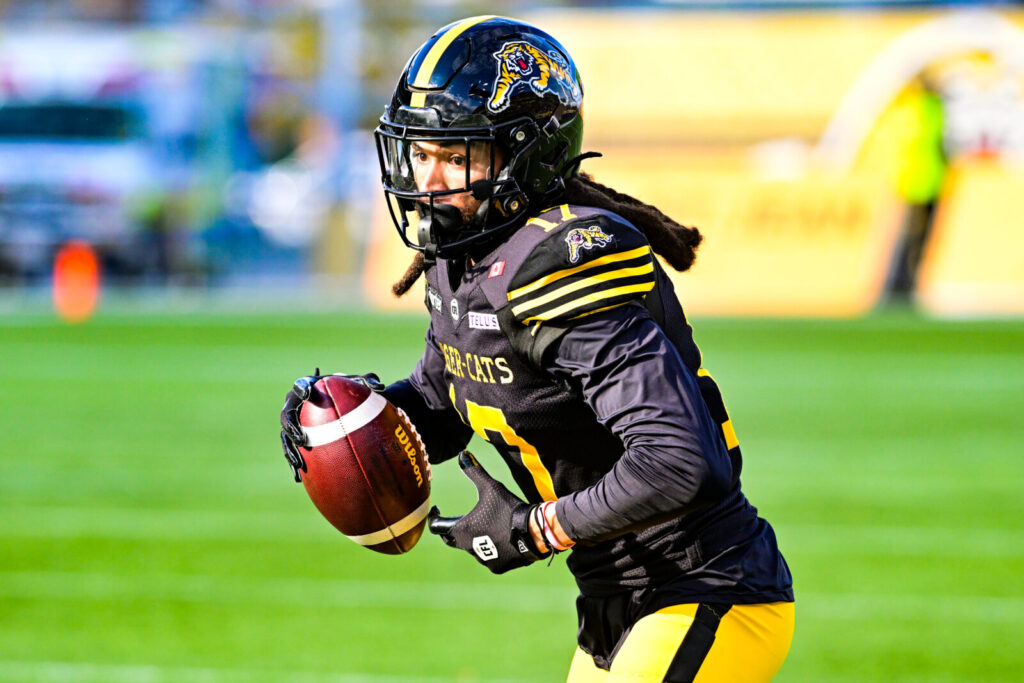
A growing wave of HBCU-developed football talent is continuing to carve out professional space in the Canadian Football League, reinforcing a long-standing but often under-discussed pipeline between Black college football and Canada’s pro ranks.
As roster competition tightens in the NFL, the CFL has increasingly become a viable proving ground for athletes ready to translate their skill sets into a different style of professional football.One of the names emerging in this current wave is Shemar Bridges, formerly of Fort Valley State University, who has taken his game to the CFL with the Hamilton Tiger-Cats. Bridges represents the classic HBCU defensive profile—physical, instinctive, and built for high-tempo competition—now adapting to the wider field and motion-heavy Canadian game.
Another standout in this broader movement is Aubrey Miller Jr., developed at Jackson State University, a program that has become one of the most visible modern HBCU pipelines for professional talent. Miller’s transition reflects the continued credibility of Jackson State’s defensive development under recent national attention, especially at linebacker where speed and open-field tackling are premium traits.In the secondary, Quincy Robinson, formerly of Delaware State University, has found opportunity with the Toronto Argonauts.
His move adds to Toronto’s reputation for integrating versatile defensive backs who can handle the CFL’s unique spacing, motion, and deep-ball demands.More recently, Dylan Djete out of Alabama State University has entered the CFL system with the Saskatchewan Roughriders. His addition continues the pattern of HBCU athletes earning roster spots in one of the league’s most physically demanding defensive environments.What stands out across this pipeline is not just opportunity—but adaptability.
The CFL game forces HBCU athletes to expand their skill sets: faster pre-snap reads, wider defensive spacing, and an emphasis on open-field pursuit. For many, it becomes less of a fallback and more of a developmental bridge that keeps professional careers alive and evolving.As scouting continues to widen beyond traditional Power Five pathways, HBCU programs remain steady contributors to the global football ecosystem.
The CFL, in turn, continues to serve as a legitimate stage where that talent is tested, refined, and often rediscovered.

Worked as a Scout and volunteer for the East n West Shriners game in 2016-2017.
Also attended the Hula bowl and Tropical Bowl games. 2022
Also was a independent Agent and Scout at the CGS bowl game in 2021.
Worked All star games like the EPS All-Americans game in 2017.