
NFL Claim Order | What Team Has the First Right To Claim?

The NFL’s cut-down day, typically held at the end of the preseason, is one of the most intense periods in the league’s calendar. Teams are required to trim their rosters to a specified number (usually 53 active players) before the regular season begins. While the day is crucial for both players and coaches, it doesn’t signal the end of player movement. Instead, it opens a new chapter where waived or released players can be claimed by other teams via the NFL’s claim process.
The NFL claim order determines the priority for teams seeking to sign these waived players. Understanding how this system works is key to understanding how teams reshape their rosters in the wake of cut-down day.
What is the NFL Claim Order?
The NFL claim order is essentially the priority list that determines the order in which teams can claim players who have been waived by other teams. This claim system is in place to create a level of fairness, preventing any one team from hoarding all the best talent that is available after final cuts.
Here’s a breakdown of how the claim process works:
- Waiver Period: After cut-down day, teams can waive players, meaning those players are no longer part of the roster but are not yet free agents. These players are subject to waivers, where other teams have the option to “claim” them.
- Claiming a Player: If a player is claimed off waivers, the team that claims the player assumes the remaining terms of the player’s contract, including salary and any bonus structures. The player is immediately placed on the new team’s roster.
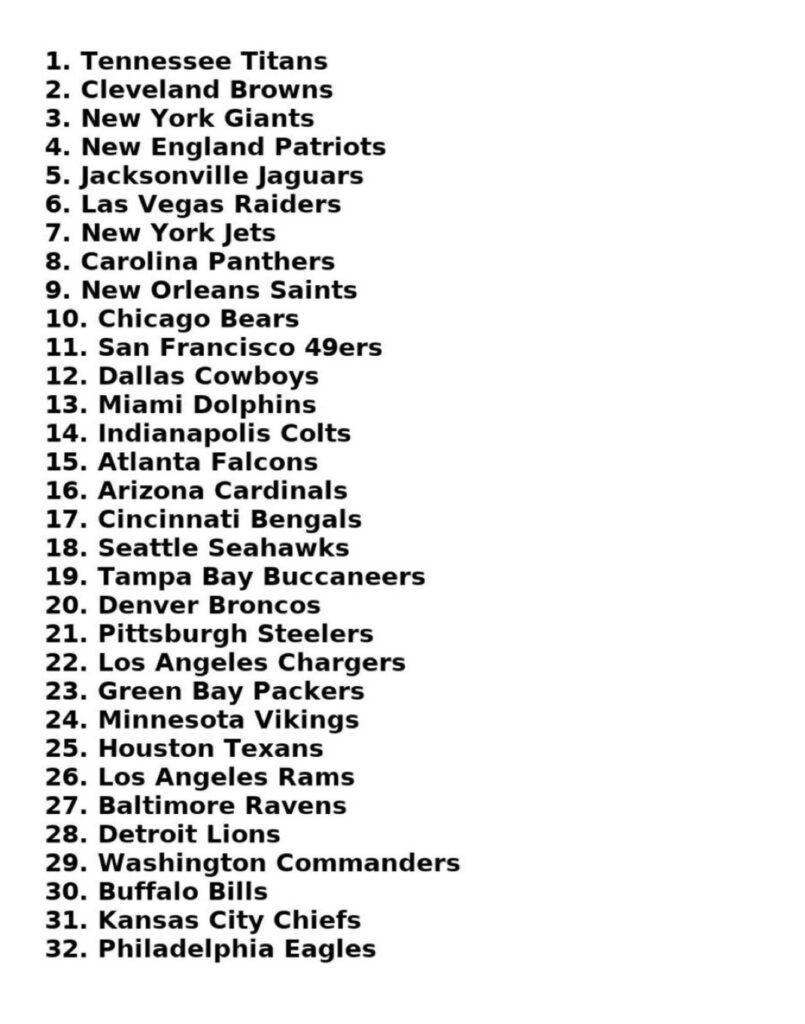
- Claim Order: The claim order is set based on the teams’ records from the previous season, but with a few notable exceptions:
- Worst to Best Record: Teams with the worst records from the previous season receive the highest priority for claiming a player. In other words, the team with the worst record gets the first crack at claiming a player, the team with the second-worst record gets the second chance, and so on.
- Playoff Teams: Teams that made the playoffs are placed behind non-playoff teams in terms of priority. For example, a team that finished with a losing record but made the playoffs will have a lower waiver priority than a team that did not make the playoffs but had a worse record.
- Tiebreakers: If multiple teams with the same record put in claims for the same player, the team with the worse strength of schedule from the previous season is given the higher priority.
- After Week 4: After the season begins and the first few weeks pass, the waiver claim order is reset based on the current regular-season records. If two teams with identical records claim the same player, the tiebreaker is based on the strength of schedule from the current season.
What Happens After a Claim Is Made?
Once a player is claimed off waivers, they are immediately placed on the claiming team’s roster. The original team that waived the player loses that player, and the new team assumes the player’s existing contract, which can include both base salary and any future guaranteed money.
If a player is not claimed by any team, they are free to sign with any club as a free agent, and they can negotiate a new contract.
Strategies Teams Use Around Claim Day
- Roster Construction: Teams will often cut players in anticipation of the waiver process. For example, a team may waive a player in the hopes that no one claims them, allowing them to place that player on their practice squad. If the player is claimed, the team may be trying to ensure they have an opportunity to add someone from waivers who might fit better on the roster.
- Claiming Players: Teams may also target specific players on the waiver wire to bolster their depth. A team that has suffered injuries or has weak areas in its roster may use the claim order to sign an available player who can contribute immediately.
- Depth and Development: Often, lower-priority teams will claim players not necessarily for their ability to start immediately but as development projects or for depth. A team with a weaker roster may prioritize claiming young, promising players to develop rather than veterans who may not fit the team’s long-term vision.
What Happens to Players After Cut-Down Day?
Not all players who are waived after cut-down day make it onto another team’s roster. Many are placed on the practice squad, which allows teams to keep players around without occupying a full roster spot. Practice squads can have up to 16 players, but players on practice squads cannot be signed by another team unless that team is willing to add the player to their active roster.
In addition, some players may not be claimed at all and end up as free agents, able to sign with any team. Free-agent players are not subject to the waiver claim order and can negotiate their own terms with interested teams.
The Importance of Cut-Down Day and Waivers
Cut-down day is about more than just trimming rosters to the regular season’s required size; it’s about strategy, long-term vision, and making the final adjustments that could determine a team’s success throughout the season. For some players, it’s the final opportunity to secure a spot on an NFL roster, while for others, it could be the start of a journey with a new team.
Ultimately, the NFL claim order is designed to provide teams with an equal opportunity to add players who could potentially fill critical needs. Whether through the waiver system, practice squad, or free agency, teams are constantly refining their rosters in pursuit of excellence.
Conclusion
The NFL claim order after cut-down day is a key mechanism in roster management. It allows teams to potentially improve their roster by picking up players that other teams have deemed surplus to requirements. By giving priority to teams with the worst records from the previous season, the system ensures a measure of competitive balance, giving every team a fair chance to strengthen their roster as the regular season approaches. For teams and players alike, the days following cut-down day are filled with uncertainty, strategy, and opportunity.

NFL Draft Diamonds was created to assist the underdogs playing the sport. We call them diamonds in the rough. My name is Damond Talbot, I have worked extremely hard to help hundreds of small school players over the past several years, and will continue my mission. We have several contributors on this site, and if they contribute their name and contact will be in the piece above. You can email me at nfldraftdiamonds@gmail.com