
Jeffery Simmons Makes the Bears Better | Whether He Makes Them Contenders Is Another Question
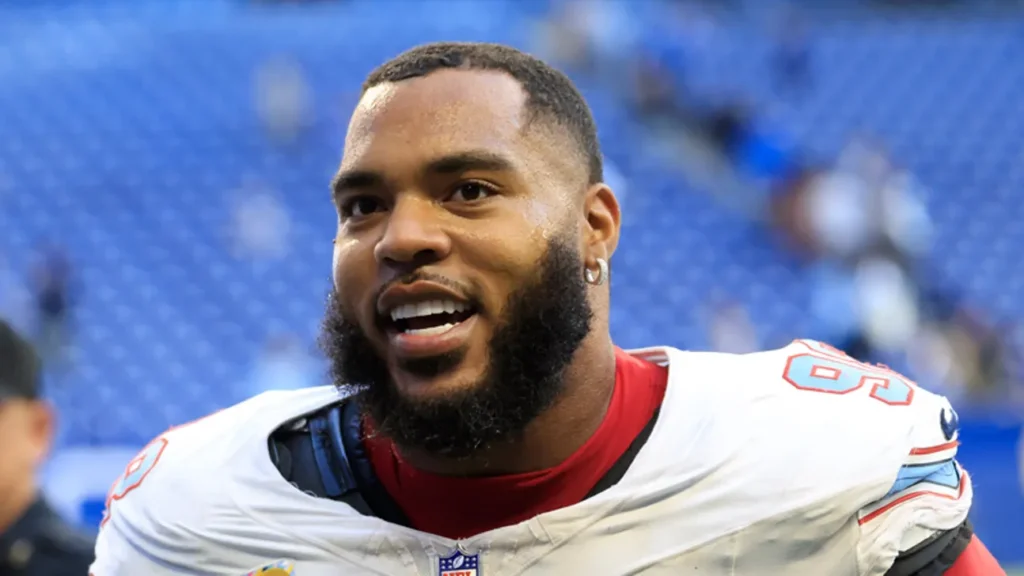
The immediate reaction to the Bears acquiring Jeffery Simmons is obvious: Ryan Poles just added one of football’s premier defensive tackles. That alone makes Chicago a better team.
The more difficult question is whether the Bears improved enough to justify the cost.
Simmons does not need to lead the league in sacks for this trade to succeed. His value lies in his ability to alter offensive game plans. Interior pressure remains one of the NFL’s most disruptive forces, and Simmons is among the few defensive tackles capable of consistently collapsing the pocket without schematic help.
That matters because of what it could do for the players around him.
The Bears have spent the last two seasons searching for consistent pass-rush production beyond Montez Sweat. Opposing offenses frequently devoted resources toward neutralizing Sweat, daring someone else to win one-on-one matchups. Simmons changes those math problems.
If offensive lines slide protections toward Simmons, Sweat should see more favorable opportunities on the edge. More importantly, a young pass rusher like Austin Booker may benefit the most. The Bears do not necessarily need Booker to become a star. They need him to become a reliable complementary pass rusher. Simmons could create the kind of one-on-one opportunities that accelerate that development.
That is the optimistic view, and it is a reasonable one.
The concern is that the trade solves one problem while leaving another largely untouched.
The Defensive Backfield Remains the Biggest Variable
Championship defenses are rarely built on pass rush alone.
The modern NFL demands coverage players capable of surviving against elite quarterbacks when the pass rush does not immediately win. Every contender eventually faces situations where the ball comes out in under three seconds, neutralizing even great defensive lines.
At that point, coverage takes over.
That is where the Bears still have questions.
The most important involves Jaylon Johnson.
For several years, Johnson developed into one of the league’s most dependable cornerbacks. At his best, he could erase an opponent’s top receiver and let the defense shift resources elsewhere. However, injuries interrupted that trajectory. Johnson missed significant time and clearly wasn’t himself when he returned. Multiple reports noted he struggled to regain the form that once made him a Pro Bowl and All-Pro caliber defender.
The problem for Chicago is not merely whether Johnson can rebound.
The problem is how much the defense depends on it.
If Johnson returns to peak form, the secondary suddenly looks much more stable. If he remains merely average, the Bears could find themselves with an elite defensive front and a vulnerable back end.
That distinction matters in January.
The concerns do not stop there.
Tyrique Stevenson continues to embody both promise and frustration. Few defensive backs on the roster possess his physical gifts, yet consistency remains a concern. Coaches can live with occasional mistakes from young players. What they cannot survive are repeated coverage busts against elite offenses. Reports surrounding the secondary have continued to describe Stevenson as a player with talent but not necessarily complete trustworthiness snap after snap.
Meanwhile, questions surrounding depth remain. Injuries can turn a perceived strength into a weakness almost overnight, and the Bears already understand how quickly cornerback depth can disappear over the course of a season.
Which raises an uncomfortable question.
Did Poles invest heavily in the area that most needed investment?
The Risk of Betting Against the Future
This is where comparisons to the Ryan Pace era become unavoidable.
Not because Simmons is comparable to any previous acquisition.
Because the philosophy is.
For years, Bears fans watched Pace move premium draft capital in pursuit of established veterans. Sometimes the player was excellent. That was never the real issue. The problem was opportunity cost.
Premium draft picks are more than prospects. They are financial flexibility. They are roster depth. They are future starters under team-friendly contracts.
Poles appears to be making a calculated assumption.
He is betting those first-round selections will not be premium picks.
He is betting that with Caleb Williams, an upgraded offense, and an improved defense, Chicago will regularly draft in the twenties rather than the top ten.
If he is right, surrendering those selections becomes far easier to justify.
If he is wrong, the trade becomes significantly harder to defend.
It is a wager on organizational trajectory as much as player talent.
Why Another Move May Still Be Necessary
One underappreciated aspect of the Simmons deal is that it may increase pressure on Poles to remain aggressive.
Once a front office commits premium assets to a veteran star, standing still becomes more difficult.
The Bears no longer appear to be building toward contention.
They are acting like contenders.
That reality should keep defensive back help firmly on the radar.
A reunion with Nahshon Wright would make sense from a roster-construction standpoint. Wright provided length, ball skills, and starting experience during his time in Chicago before departing in free agency. He would not eliminate every concern, but he could improve depth and create meaningful competition.
More broadly, Poles should continue exploring the veteran cornerback market.
Teams with championship aspirations typically make at least one in-season addition to address depth concerns. The Bears now possess a defensive line capable of affecting games at a high level. Complementing that investment with another experienced defensive back could provide significantly more value than adding another rotational front-seven player.
The logic is straightforward.
The Bears have strengthened the pass rush.
Now they need to ensure the secondary can capitalize on it.
So, Are the Bears Super Bowl Contenders?
They are closer.
Much closer.
Simmons raises the floor of the defense immediately and raises the ceiling if his presence helps unlock greater production from Sweat and Booker.
But championship contention is determined by complete rosters, not isolated strengths.
The Bears appear positioned to field an elite offense after years of resource investment. They now possess a potentially dominant defensive front. Yet the final step from playoff team to legitimate Super Bowl threat may depend on questions that Simmons cannot answer.
Can Jaylon Johnson return to elite form?
Can the secondary stay healthy?
Can Stevenson become reliable?
Will Poles make another move before the season’s biggest games arrive?
The Bears solved a major problem by acquiring Simmons.
Whether they solved enough problems remains the defining question of their Super Bowl aspirations.

Dan Brown
(Aspiring NFL Writer | Children’s Author | Chicago Bears Devotee in Chiefs Territory)
A career-changing journey has led me to pursue a passion for NFL writing, fueled by decades of unwavering devotion to the Chicago Bears. I am focused on crafting compelling NFL content. Drawing on a unique skill set honed from self-publishing three children’s picture books, this Chicago native, now residing in the heart of Chiefs Kingdom in SE Kansas, offers a unique viewpoint on the NFL landscape, combining a deep understanding of Bears history with a front-row seat to the modern dominance of the Chiefs. With a background as a retired cook and an Associate Degree in Culinary Arts, the transition to writing has been a natural progression, providing a fulfilling outlet for a passion that has always been expressed best on paper. Eager to contribute engaging and insightful NFL articles to a wider audience, I am seeking opportunities to leverage this blend of lifelong fandom, creative writing experience, and dedication to the craft.