
Top 100 Prospect Arrested Just Days Before the NFL Draft
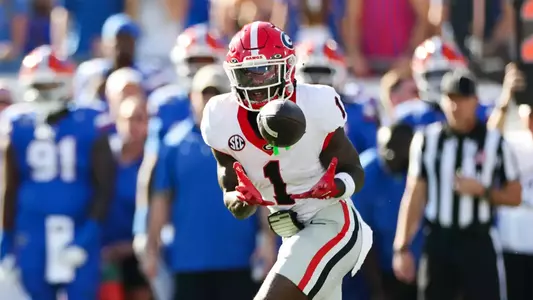
The timing couldn’t be worse for Zachariah Branch. Just as his name is gaining traction among scouts as a likely Day 2 selection in the 2026 NFL Draft, an early-morning arrest in Athens introduces an all-too-familiar question in NFL circles: how much do off-field decisions matter when evaluating talent?
On paper, the charges themselves, misdemeanor obstruction and alleged failure to comply with police commands, are not severe. This isn’t a case involving violence, substance abuse, or anything that would typically trigger automatic removal from draft boards. But the NFL has never evaluated prospects purely on the severity of the incident. Context, timing, and perceived judgment often carry just as much weight as the legal outcome.
What makes this situation concerning isn’t just the arrest, it’s the decision-making process behind it. NFL teams invest millions into draft picks, and they are notoriously risk-averse when it comes to players who introduce uncertainty. For front offices, even minor legal issues can signal a lack of discipline, awareness, or maturity. The question they’ll ask isn’t “How serious was this charge?” but rather “Why was he in this situation at all?”
Branch’s case fits into a broader pattern the league has wrestled with for years: elite prospects jeopardizing their stock due to preventable mistakes. Teams expect players on the cusp of the NFL to operate with heightened awareness, especially during critical evaluation windows like the pre-draft process. Being in a situation where law enforcement alleges non-compliance, even if ultimately minor raises concerns about composure and accountability.
There’s also the issue of perception. Draft rooms are influenced not just by film and analytics, but by interviews, background checks, and psychological evaluations. Incidents like this tend to come up repeatedly in those settings. Teams will want to know: Was this an isolated lapse, or part of a larger pattern? How does the player respond when confronted with authority? Can he handle the increased scrutiny and responsibility that comes with being a professional athlete?
History suggests that incidents like this don’t necessarily derail a player’s career. but they can shift momentum. A projected second-round pick can slip into the third. A player once seen as “safe” might now be categorized as “requires further evaluation.” In a draft where margins are thin, even small doubts can have financial consequences.
For Branch, the path forward is still very much in his control. NFL teams value accountability almost as much as talent. A clear, honest explanation, combined with a clean record moving forward, can mitigate the damage. But the reality remains: this is a self-inflicted complication at a moment when simplicity and stability are exactly what teams want to see.
Ultimately, the incident serves as a reminder of a harsh truth for draft prospects, talent gets you noticed, but judgment determines how far you go.

NFL Draft Diamonds was created to assist the underdogs playing the sport. We call them diamonds in the rough. My name is Damond Talbot, I have worked extremely hard to help hundreds of small school players over the past several years, and will continue my mission. We have several contributors on this site, and if they contribute their name and contact will be in the piece above. You can email me at nfldraftdiamonds@gmail.com