
When the Ravens’ Offensive Line Changes the Math on Sundays
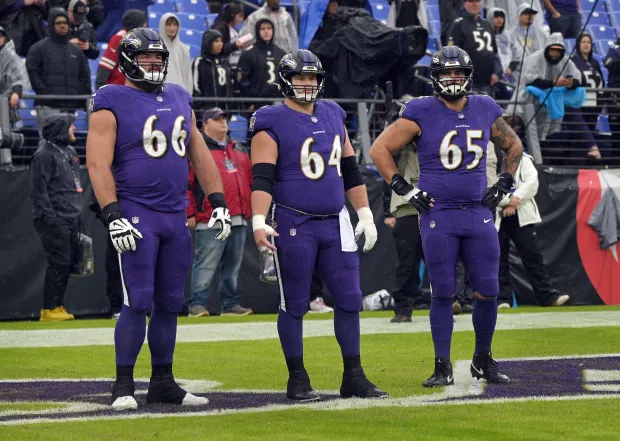
The Ravens can have the most dangerous quarterback in football and a running back who still punishes tacklers in his 11th season, and none of it matters much if the five men in front of them lose the first two seconds of a snap. Offensive line play is the part of the game that shows up least on a highlight reel and most in the final score. In Baltimore, 2026 is a real test of that idea, because the front office rebuilt the interior of the line almost from scratch.
Five Jobs That Change Every Snap
On any given play, the line is doing two different jobs at once. In the run game, it has to move people who weigh 300 pounds or more against their will, create angles, and give the back a crease before the second level closes. In pass protection, it has to do the opposite: absorb, slide, and keep a pocket intact long enough for the quarterback to read the coverage.
The center sits in the middle of both, calling protections, identifying the middle linebacker, and delivering the snap cleanly. That last part sounds trivial until it goes wrong. A late or high snap wrecks timing before the play has started, and a missed protection call leaves one rusher unblocked no matter how good everyone else is. This is why losing a center hurts more than the depth chart suggests. The position is part lineman, part air traffic controller.
Why Sacks Tell the Wrong Story
Fans usually judge a line by its sack total, and that number is misleading. Sacks depend heavily on how long the quarterback holds the ball, how quickly receivers get open, and whether a running back picks up a blitz. A patient passer who extends plays can take more sacks behind a decent line than a quick-release passer takes behind a poor one.
Pressure rate is a better starting point, though it is not perfect either. The more useful question is how long a line keeps the pocket clean before it breaks down, and how often it wins its individual matchups in the first few seconds. A group that holds up for 2.5 seconds on most snaps gives an offensive coordinator the whole playbook. A group that cracks at 1.8 seconds forces quick throws, shorter routes, and a lot of improvisation.
Rebuilding the Interior
Baltimore’s problem in 2025 was concentrated in the middle. The guard tandem of Daniel Faalele and Andrew Vorhees ranked near the bottom of the league in pass block win rate, Lamar Jackson was sacked 36 times, and he missed four games. When interior pressure arrives quickly, a quarterback cannot step up, which takes away the escape route that makes Jackson so difficult to defend.
The response was aggressive. John Simpson returned at left guard, bringing experience and a physical run-blocking style, though he also led all offensive linemen in penalty yards last season. Penn State’s Vega Ioane was drafted 14th overall and moved from left guard, where he played in college, to right guard. Tyler Linderbaum, meanwhile, left for Las Vegas, which turned center into the biggest open question on the roster. New offensive line coach Dwayne Ledford arrived from Atlanta with a reputation for building strong run-game units, and offensive coordinator Declan Doyle wants Jackson running fewer designed carries and operating more from the pocket.
That last goal ties everything together. Asking Jackson to throw more from structure only works if the structure holds. Every snap the interior buys is a snap in which the offense can call a deeper concept, keep a tight end in the route rather than in protection, or let Derrick Henry face a box that is not already stacked. It is also why Ravens betting odds can shift on a midweek injury report about a guard, since anyone reading NFL betting odds before kickoff is, knowingly or not, putting a price on five players most viewers never watch.
What the Pocket Clock Says
Time is the variable that matters most. Analytics staff at PFF timed the pocket using survival analysis and found that a quarterback who held the ball for seven seconds on every snap would be pressured on 199 of 200 plays. No line can protect forever. The goal is to make the collapse happen as late as possible and to make sure the quarterback’s clock and the line’s clock match.
That study also explains why sack totals can flatter or punish a line unfairly. Peyton Manning made ordinary protection look elite by getting rid of the ball, while other passers took sacks behind well-graded units. For the Ravens, the question is not only whether the new guards win their reps, but whether Doyle’s timing and Jackson’s reads line up with how long those reps last.
The center spot got clearer in July, when the team shored it up by adding Ethan Pocic. He entered his 10th season with 97 starts and four years in Cleveland, so he knows the AFC North’s defensive fronts well. The caveat is health, since he tore an Achilles last December, but experience matters more at center than at any other line spot because communication breaks down first when a new group is still learning each other.
Before the summer additions, local coverage had sounded worried that an upgraded guard room could be wasted by an unresolved center battle. That concern was fair. A line is only as strong as its weakest link, and rushers are coached to attack whoever looks unsure.
Counting Seconds Instead of Sacks
The best way to watch this line on Sundays is to ignore the ball for a few snaps. Watch the middle three. See whether Jackson can step into throws or has to bail out to his right. Notice whether Henry gets to the line of scrimmage untouched or meets a defender in the backfield. Count how often the pocket still has a clean shape when the quarterback reaches the top of his drop.
Two games into the season, the early returns are mixed, and a rebuilt line rarely settles in September. Rookie guards have growing pains, veteran centers need time with new neighbors, and new blocking schemes take a few weeks to become instinct. The payoff comes later, when the calls are automatic and the double teams pass off cleanly. If that happens by November, the Ravens will not need to hide Jackson behind quick throws and scrambles. They can play the offense they designed, which is the whole point of rebuilding the middle in the first place.

NFL Draft Diamonds was created to assist the underdogs playing the sport. We call them diamonds in the rough. My name is Damond Talbot, I have worked extremely hard to help hundreds of small school players over the past several years, and will continue my mission. We have several contributors on this site, and if they contribute their name and contact will be in the piece above. You can email me at nfldraftdiamonds@gmail.com