
Cold Water Recovery for Football Prospects: Staying Ready for the Next Session
For a football prospect, one hard workout is rarely the biggest challenge. The harder part is coming back the next morning ready to sprint, cut, jump, and produce the same quality of movement again.
That becomes especially important during NFL Combine and Pro Day preparation. A training week may include acceleration work, position drills, change-of-direction sessions, strength training, and conditioning, sometimes with two sessions packed into the same day.
The margins are small. A prospect working on his 40-yard dash cannot afford to spend Tuesday’s speed session compensating for what Monday’s training did to his legs.
Recovery, then, is not simply about feeling less sore. It is about being ready to perform the next important session well.
Different Sessions Leave Different Fatigue Behind
Football preparation creates several kinds of physical stress in the same week.
Repeated acceleration and sprinting load the hamstrings and calves. Cutting and rapid deceleration place additional demands on the lower body. Position work adds its own volume, while heavy squats, pulls, and explosive lifts create another layer of fatigue.
The effect also varies by position.
A receiver or defensive back may spend a session repeatedly accelerating, stopping, and changing direction. A running back might combine short sprints and cutting drills with sled work or lower-body strength training.
Some soreness is expected. The problem begins when yesterday’s fatigue changes today’s movement.
If a prospect cannot fully extend through acceleration, plants differently because one leg feels stiff, or loses explosiveness during repeated jumps, the session is no longer being performed under normal conditions.
That is where recovery decisions start to matter.
Where Cold Water Can Fit Into the Week
Cold-water immersion can be useful when short-term recovery is important, particularly after demanding field or conditioning sessions.
Research suggests it may help reduce perceived muscle soreness and support some measures of short-term recovery after strenuous exercise. For a prospect with another speed or position session the following day, that can make cold water a reasonable option.
The practical side matters too.
Using a few bags of ice after an occasional workout is simple enough. Doing it repeatedly during an eight- or ten-week preparation block is different. Buying ice, carrying it home, waiting for the water to cool, and repeating the process several times a week adds another task to an already busy schedule.
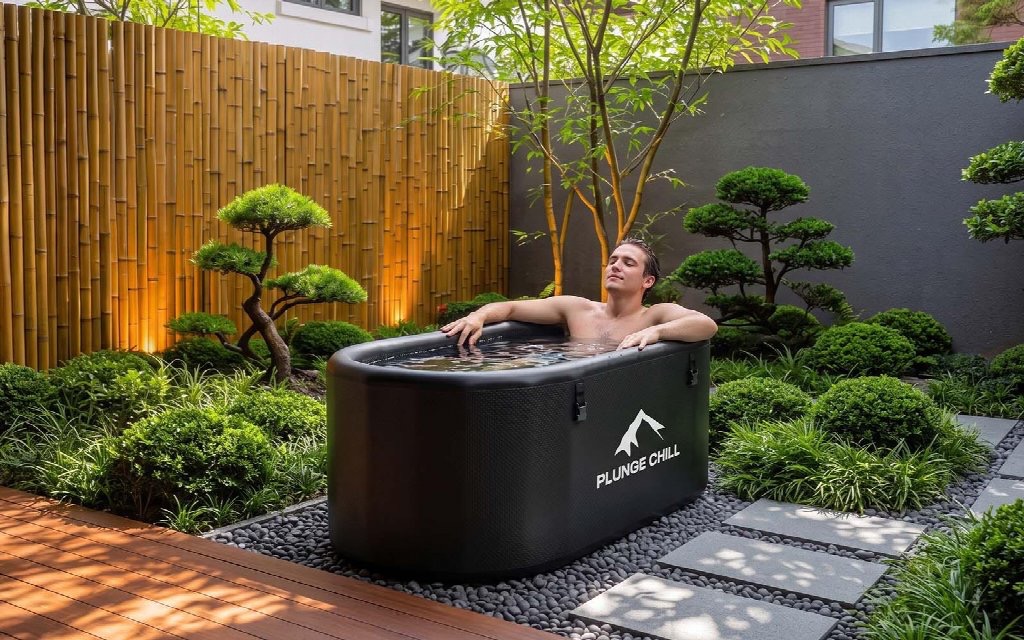
For athletes who already use cold water regularly, a cold plunge with chiller can simplify that routine by keeping the setup at a consistent target temperature without requiring fresh bags of ice before every session.
The point is not to make the water as cold as possible. It is to make an existing recovery routine easier to repeat when it actually fits the training schedule.
The Next Session Should Influence the Decision
The best time to use cold water depends partly on what comes next.
Consider a prospect who finishes a demanding change-of-direction session in the morning but has position work scheduled later that afternoon. Or a defensive back who completes a high-volume speed session on Tuesday and has another timed workout Wednesday morning.
In those situations, managing soreness between sessions may be useful because another performance-focused workout is approaching quickly.
The situation changes after a lighter technical day or before a scheduled rest day. If there is plenty of time to recover naturally, adding cold-water immersion may offer less practical value.
This is why automatically plunging after every workout misses the point.
Recovery during Combine preparation should follow the training calendar, not a fixed daily checklist.
Be More Careful After Strength Training
Strength work deserves separate consideration.
Cold-water immersion is often treated as a general post-workout recovery method, but immediately using it after every lifting session may not fit every training goal.
Research has raised questions about frequent cold-water immersion directly after resistance training when long-term strength and muscle development are priorities. That makes timing important for prospects who are still trying to build strength during the earlier stages of preparation.
There is no need to turn this into an all-or-nothing rule.
After a heavy strength session, an athlete may simply choose not to plunge immediately. After a demanding field session followed by another speed workout the next morning, short-term recovery may carry more weight.
The training objective should determine the recovery choice.
Combine Preparation Is Built on Repeatable Quality
Prospects may spend weeks trying to improve very small details.
A slightly cleaner first step can improve the opening portion of a 40-yard dash. Better body position can make a change-of-direction drill more efficient. A small improvement in takeoff mechanics can matter during vertical or broad jump testing.
Those changes come from repetition.
If heavy soreness causes an athlete to alter sprint mechanics or protect one side of the body, simply completing the scheduled workout is not necessarily productive.
That is why the most useful recovery routines are often the ones that create the least disruption.
Sleep, food, hydration, appropriate training volume, and communication with coaches still do most of the work. Recovery equipment should make the process easier, not turn it into another demanding part of the day.
For athletes who already include cold water in that routine, Plunge Chill offers tubs and chiller systems designed to keep a home cold plunge ready without rebuilding an ice bath for every session. Code Plunge10 provides 10% off eligible orders.
The equipment does not decide when cold water should be used. The training schedule does.
Watch Performance, Not Just Soreness
Muscle soreness is only one signal.
A prospect may feel generally fine but still notice that sprint times are moving in the wrong direction, jumps lack their usual explosiveness, or hamstring tightness becomes more noticeable with each session.
Those patterns deserve attention.
A cold plunge may temporarily change how soreness feels, but it cannot correct poor programming, diagnose an injury, or compensate for consistently inadequate sleep and nutrition.
Sometimes the better recovery decision is reducing volume, changing the next session, or taking an additional rest day.
Persistent pain or worsening physical problems should also be discussed with qualified medical or sports-performance professionals rather than managed with recovery equipment alone.
Stay Ready for the Reps That Matter
NFL Combine and Pro Day preparation is built around small performance gains repeated over several weeks.
Cold-water immersion can have a place in that process, especially when demanding field sessions are close together and short-term recovery matters. It does not need to follow every workout, and it should not interfere with the adaptations an athlete is trying to build through strength training.
The simplest question is often the most useful:
What do I need my body to do tomorrow?
If tomorrow requires another high-quality speed, movement, or position session, cold water may be one useful part of the recovery plan. If the schedule allows more time, basic recovery may be enough.
For a prospect preparing to be measured in hundredths of a second and inches, recovery should ultimately serve one purpose: being ready to produce high-quality reps when they matter most.

NFL Draft Diamonds was created to assist the underdogs playing the sport. We call them diamonds in the rough. My name is Damond Talbot, I have worked extremely hard to help hundreds of small school players over the past several years, and will continue my mission. We have several contributors on this site, and if they contribute their name and contact will be in the piece above. You can email me at nfldraftdiamonds@gmail.com