
How the NFL Earns More From Broadcast Rights Than Any Other League on Earth
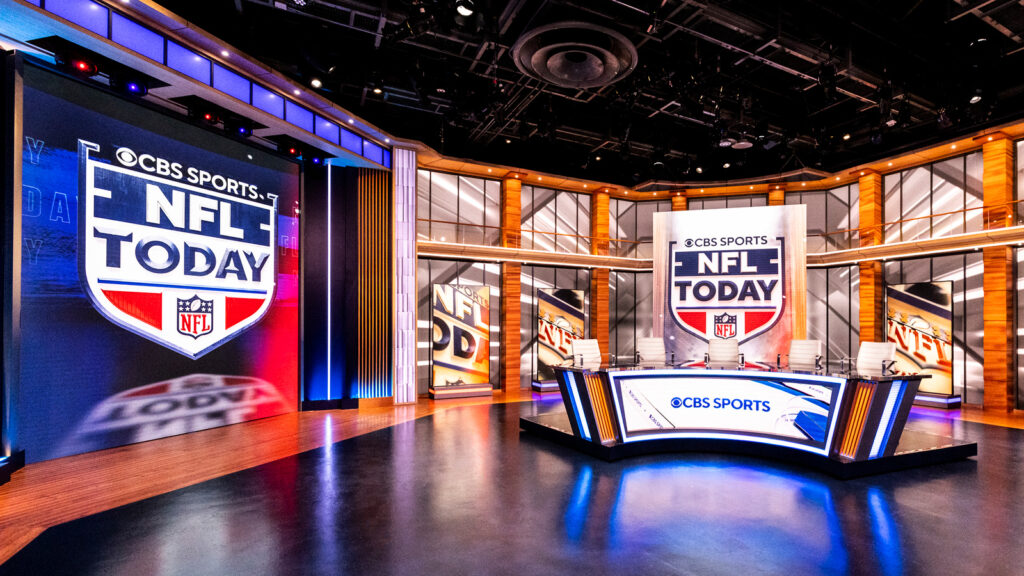
No sports property in the world commands the kind of broadcast money the National Football League collects. Its current media agreements, running from 2023 through 2033, are worth roughly $110 billion across eleven seasons, which works out to close to $10 billion every single year. That figure alone puts the NFL in a category of its own, since no rival league on any continent has ever signed a deal approaching this scale, whether measured in total value or annual payout.
The comparison becomes stark against other major competitions. England’s Premier League, widely regarded as the most valuable football league globally, secured domestic and international rights worth about $16.7 billion for its 2025 to 2029 cycle, or roughly $4.8 billion per season combined. The NBA’s newest agreement lands near the same territory annually, while the NHL sits at $625 million and MLB around $1.5 billion. The NFL simply operates on a different tier.
The economics behind this gap explain why live sport has become the most contested content in media, and why fans now engage with games across second-screen formats. Many who track the numbers follow odds and in-play markets on platforms like mcw casino live, where real-time engagement mirrors the appetite that drives networks to bid billions. That shift toward interactive viewing helps explain why broadcasters treat NFL games as irreplaceable. Scarcity keeps pushing valuations higher.
Why the NFL’s Rights Are Worth So Much
The core driver is raw audience reach, and the data is difficult to overstate. Over a recent five-year window, NFL broadcasts accounted for 24 of the top 25 most-watched programs on American television, and 77 of the top 100. No scripted series, awards show, or rival sport comes close to that concentration. When a single category of programming dominates the ratings charts this completely, networks have little choice but to pay whatever it takes to keep the games.
Scarcity amplifies the effect. Unlike leagues that play hundreds of matches spread thinly across a calendar, the NFL delivers a compact schedule where nearly every game carries weight. A regular season produces only 272 games total, and each one draws an audience that advertisers cannot reliably reach anywhere else. That combination of mass reach and limited supply is precisely what sends per-game valuations soaring beyond any comparable property.
- Appointment viewing: games air in fixed weekly windows, concentrating audiences rather than fragmenting them
- Advertiser demand: NFL slots repeatedly command the highest ad rates on television
- Cultural reach: the Super Bowl regularly ranks as the most-watched broadcast of the year
The Networks Paying the Bills
The current package is split among several major partners, each covering a distinct slice of the schedule. What stands out is how the league spread its inventory across traditional broadcast, cable, and streaming simultaneously, capturing revenue from every distribution channel at once rather than betting on a single platform. The ranked breakdown below shows how much each partner contributes annually.
- ESPN and ABC (Disney): approximately $2.7 billion per year, the largest single share, covering Monday Night Football and two Super Bowls
- Fox: near $2.3 billion annually for the NFC Sunday afternoon package
- CBS and NBC: each paying more than $2 billion per year, splitting AFC games and Sunday Night Football
- Amazon Prime Video: around $1 billion per year for exclusive Thursday Night Football, the first all-digital package
Beyond the core five, the league keeps adding supplementary deals that stack on top of the headline figure. YouTube pays roughly $2 billion annually for the residential Sunday Ticket package, Netflix committed about $150 million per year for Christmas Day games, and Peacock once paid $110 million to stream a single playoff game exclusively. Each of these agreements represents money that simply did not exist in the league’s revenue mix a decade ago.
How the Value Multiplied Over Time
The trajectory of NFL rights fees shows just how steep the climb has been. Through the 2013 season, the combined networks paid about $20.4 billion for their packages. The following cycle, spanning 2014 to 2022, jumped to $39.6 billion for essentially the same rights. The current agreement then roughly doubled that again, an increase of around 80% over the prior deal, cementing a pattern of relentless upward revaluation with each renewal.
The Broader Revenue Picture
Media rights sit at the center of a much larger financial engine. The league reportedly generated close to $14 billion in total revenue in a recent season, a figure roughly $9 billion higher than the NBA managed in the same period. Broadcast fees form the backbone of that total, and Commissioner Roger Goodell has publicly targeted $25 billion in annual revenue by 2027, an ambition that depends heavily on continued media-rights growth and international expansion.
One structural feature separates the NFL from nearly every other property: it remains the only major league that keeps all of its games, regular season and playoffs alike, available on free over-the-air television. Rather than pushing content exclusively behind paywalls, the league preserves mass accessibility, which sustains the enormous audiences that justify the fees in the first place. It is a deliberate strategy that protects the very asset broadcasters are paying for.
The takeaway is straightforward. The NFL earns more from broadcast rights than any league on the planet because it pairs unmatched audience concentration with tightly limited supply, then distributes that inventory across every available platform. As long as live football remains the single most reliable draw on American screens, the league’s position at the top of the global media-rights hierarchy looks secure for the full length of its current deal and almost certainly beyond.

NFL Draft Diamonds was created to assist the underdogs playing the sport. We call them diamonds in the rough. My name is Damond Talbot, I have worked extremely hard to help hundreds of small school players over the past several years, and will continue my mission. We have several contributors on this site, and if they contribute their name and contact will be in the piece above. You can email me at nfldraftdiamonds@gmail.com