
5 Shortest NFL Stars Who Outperformed Taller Players
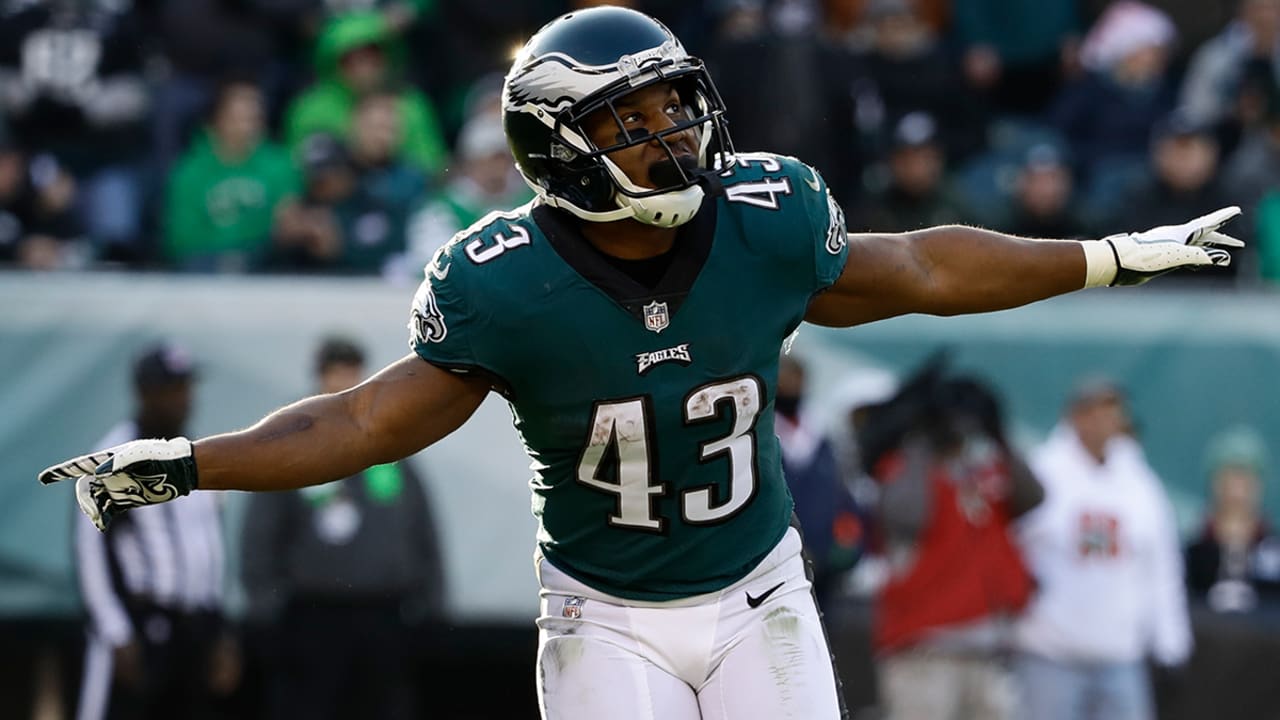
Professional talent evaluation frequently overindexes on linear dimensions, mistaking height for structural capability. On the modern gridiron, traditional height metrics frequently fall short when compared to the raw physical advantages of low leverage. Taller athletes present wider surface areas, predictable leverage points, and elongated deceleration phases that savvy coordinators easily exploit.
True athletic dominance emerges when mass concentrates close to the playing surface, altering the mechanics of contact. Sub-5’8″ football players do not succeed despite their stature; rather, their compressed frames yield a distinct mechanical advantage that NFL draft scouts consistently fail to quantify. This structural variance shifts the baseline of performance.
How Does Metric Bias Shape Modern Personnel Evaluation?
NFL front offices exploit market inefficiencies by drafting highly productive collegiate prospects discarded over arbitrary height thresholds. Recalibrating models to prioritize center-of-gravity metrics and short-area lateral quickness over vertical stature allows forward-thinking teams to identify elite contributors who slide down draft boards due to outdated physical biases.
Does A Lower Mass Center Yield Faster Cuts?
In athletic performance, mechanical efficiency dictates that an athlete with a lower center of mass has superior balance and a reduced turning radius. When analysts compare heights using web-based height comparison tools such as https://easyheightcomparison.com/, it becomes visually clear how a shorter torso enables rapid directional adjustments without losing velocity. Compared to a standard 6’2″ defensive back, a sub-5’8″ ball carrier possesses higher angular acceleration, requiring less ground force to shift momentum.
Which Short NFL Stars Consistently Outperformed Taller Players?
Traditional scouting systems consistently undervalue prospects with compressed statures. However, these five elite competitors utilized elite mechanical leverage to completely dominate their taller counterparts.
Trindon Holliday (5’5″)
Standing at just 5 feet 5 inches, Holliday weaponized his Olympic-level sprint speed to become a feared return specialist. He memorably lit up the 2013 postseason by logging two historic return touchdowns in a single playoff game for the Broncos, regularly slicing past coverage units built of much larger defenders.
Darren Sproles (5’6″)
Measuring 5 feet 6 inches, Sproles built a historic 15-year career as one of the most versatile weapons in NFL history. He routinely broke the tackles of towering linebackers, amassing 19,696 all-purpose yards to rank among the league’s top career leaders while proving low leverage dominates contact.
Maurice Jones-Drew (5’7″)
At a compact 5 feet 7 inches, Jones-Drew utilized his exceptionally dense frame to overpower defensive lines filled with 6-foot-plus players. The three-time Pro Bowler captured the NFL rushing title in 2011 with 1,606 yards, proving that a shorter, lower striking zone can thoroughly dictate game physicalities.
Barry Sanders (5’8″)
Though only 5 feet 8 inches, Sanders is universally revered as a top running back in gridiron history. His low center of gravity generated unrivaled lateral displacement, carrying him to an MVP award and 15,269 rushing yards while leaving much taller, longer-limbed defenders grasping at empty air.
Bob Sanders (5’8″)
Nicknamed The Eraser, the 5-foot-8-inch safety completely altered game plans with his ferocious, bone-rattling hitting style. He overcame significant physical height disadvantages to anchor the Colts’ secondary, culminating in a Super Bowl ring and earning the prestigious NFL Defensive Player of the Year honor in 2007.
Do Shorter Defenders Dominate Inside Slot Coverage?
Shorter defensive players face unique spatial constraints when dropping into coverage against tall, vertical threats. To succeed, they must transition out of traditional perimeter alignments and utilize their natural biomechanical advantages in high-traffic areas where space is severely restricted.
Inside Slot Coverage
Shifting inside allows a shorter defensive back to maximize their elite lateral burst against quick receivers. Their rapid recovery speed handles sudden route breaks far more efficiently than long-striding, tall outside cornerbacks who struggle to flip their hips quickly in tight spaces.
Safety Run Support
Shorter safeties manipulate running lanes by ducking completely under the extended blocks of massive offensive tackles. By establishing a lower, more powerful anchor point, they effectively uproot blockers and violently disrupt internal run fits that taller, high-padded defensive backs cannot penetrate.
How Does a Dense, Compact Frame Reduce Injury Risk?
Shorter players frequently absorb high-velocity impacts better than their taller counterparts due to shortened kinetic levers. When force is distributed across a condensed muscular architecture, the sheer stress on vulnerable joints decreases exponentially. This unique mechanical dispersion allows compact athletes to withstand punishing hits that often sideline rangier, long-limbed players.
Why Do Scouting Models Ignore Short Prospects?
Standardized combined drills fail to capture the functional utility of low-leverage agility on an active football field. Linear evaluation tracks top-end speed in a vacuum, completely ignoring how a lower waistline allows an elite ball-carrier to mask their directional changes behind towering offensive linemen, creating a massive visual blind spot.
Questions About Short NFL Stars
How do scouts measure short prospects’ functional reach?
Scouts look past standing height to evaluate the wingspan-to-height ratio, prioritizing athletes whose arm length matches or exceeds their vertical stature. A prospect measuring 5 feet 6 inches with a 71-inch wingspan possesses the functional reaching capacity of an athlete two inches taller, stabilizing their catch radius.
What training prevents lower-back strain in dense frames?
Strength programs emphasize eccentric hamstring loading and deep core stabilization to manage the increased pelvic tilt common in thick, compact frames. Implementing a strict 2-to-1 ratio of posterior chain development to anterior movement prevents the hyper-lordosis that damages lower-back vertebrae during high-velocity collisions.
Why do shorter returners excel in modern kickoffs?
The modern alignment reduces the coverage unit’s running start, making short-area lateral displacement far more effective than long-stride top-end speed. Shorter returners exploit this by executing a single vertical cut within 1.2 seconds of catching the ball, slicing through narrow gaps before lanes close.

NFL Draft Diamonds was created to assist the underdogs playing the sport. We call them diamonds in the rough. My name is Damond Talbot, I have worked extremely hard to help hundreds of small school players over the past several years, and will continue my mission. We have several contributors on this site, and if they contribute their name and contact will be in the piece above. You can email me at nfldraftdiamonds@gmail.com