
How NFL Draft Scouts Evaluate Prospects: The Metrics That Matter Most
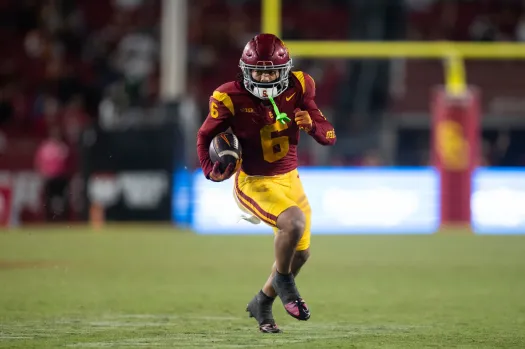
The NFL Draft is the most analytically scrutinized talent evaluation exercise in professional sports. Hundreds of scouts, analysts, and coaches spend months assessing hundreds of college players, combining physical measurements with film study, interview assessments, and performance testing to produce rankings that will determine how franchises invest their most valuable non-financial resources: draft picks. Understanding how that evaluation process works gives fans a much richer window into what teams are actually looking for.
The NFL Combine: Physical Baselines
The NFL Scouting Combine in Indianapolis is the most visible part of the pre-draft evaluation process. Prospects are measured, timed, and tested across a series of standardised drills in front of coaches, scouts, and team executives from every franchise.
The forty-yard dash is the most famous single measurement, providing a standardised assessment of straight-line speed. But serious evaluators use it as one data point among many rather than a defining metric. Context matters enormously: a wide receiver running 4.3 seconds means something different from an offensive lineman running the same time.
The three-cone drill, short shuttle, vertical jump, and broad jump all test different athletic qualities. Bench press reps assess upper body strength. These measurements provide baseline physical profiles that scouts combine with film study to form complete evaluations.
Film Study: What Scouts Actually Watch
The most important part of NFL draft evaluation is not the Combine. It is film study. Watching a player perform in actual football games against actual competition reveals things that no testing environment can replicate.
Scouts watch for technical execution under pressure, decision-making speed, how a player performs in the fourth quarter when fatigued, how they respond to adversity, and whether the physical tools they possess translate into football effectiveness. A player with elite Combine numbers who does not play fast on film is a risk. A player with modest measurements who consistently makes plays in games is a prospect.
Positional technique, hand usage for offensive and defensive linemen, route running precision for receivers, and ball-tracking ability for defensive backs are all evaluated through film in ways that standardised testing cannot capture.
Position-Specific Evaluation Criteria
Each position has its own evaluation framework. Quarterbacks are assessed on processing speed, accuracy at all depths and platforms, the ability to go through progressions and find the open receiver rather than locking onto a first read, and performance under pressure.
Offensive linemen are evaluated on footwork in pass protection, hand placement and strength in run blocking, and the ability to redirect and adjust to different defensive techniques. Athleticism matters but only if it is functional athleticism that shows up in how they play.
Cornerbacks are assessed on coverage skills, press technique, and the ability to recover when beaten. Athleticism is necessary but so is the instinct to find the ball and the willingness to tackle in the open field.
The Intelligence and Character Evaluation
NFL evaluators spend considerable time assessing non-physical qualities that are difficult to measure but have significant predictive value for how well a player develops professionally. Football intelligence, the ability to learn a complex playbook, identify formations, and adjust in-game, is evaluated through the Wonderlic cognitive test at the Combine and through more detailed football-specific questioning in team interviews.
Character assessments, based on background checks, interviews with coaches and teammates, and the player’s own interview performance, attempt to predict how a prospect will handle the pressures of professional football. A talented player who does not respond well to coaching or who lacks the work ethic to refine their technique is a poor investment regardless of their physical gifts.
Turkish American football fans following the draft through resources and platforms like hititbet will recognise the increasing coverage given to these character and intelligence assessments as the sport’s global audience has grown.
Draft Position vs Player Quality: The Persistent Challenge
One of the most consistent findings in NFL draft research is that draft position is an imperfect predictor of player quality. First-round picks fail. Late-round picks exceed all expectations. The evaluation process, sophisticated as it is, operates with significant uncertainty.
The reasons for this include the difficulty of projecting from college competition to professional level, the role of scheme fit in player success, the impact of injuries on development trajectories, and the genuine unpredictability of how individual players respond to the professional environment.
How Analytics Is Changing Draft Evaluation
NFL teams have invested heavily in analytics departments that supplement traditional scouting with statistical modelling. Expected performance models, similarity scores comparing prospects to historical players, and contract value analysis all inform how franchises approach the draft.
The best organisations combine analytical rigor with deep traditional scouting rather than replacing one with the other. The data provides context and catches patterns that human evaluation might miss. The scouts provide the football knowledge and film interpretation that no model fully replicates. The combination is more powerful than either alone.

NFL Draft Diamonds was created to assist the underdogs playing the sport. We call them diamonds in the rough. My name is Damond Talbot, I have worked extremely hard to help hundreds of small school players over the past several years, and will continue my mission. We have several contributors on this site, and if they contribute their name and contact will be in the piece above. You can email me at nfldraftdiamonds@gmail.com