
Jack Campbell’s Neck Injury and How NFL Players Regain Movement
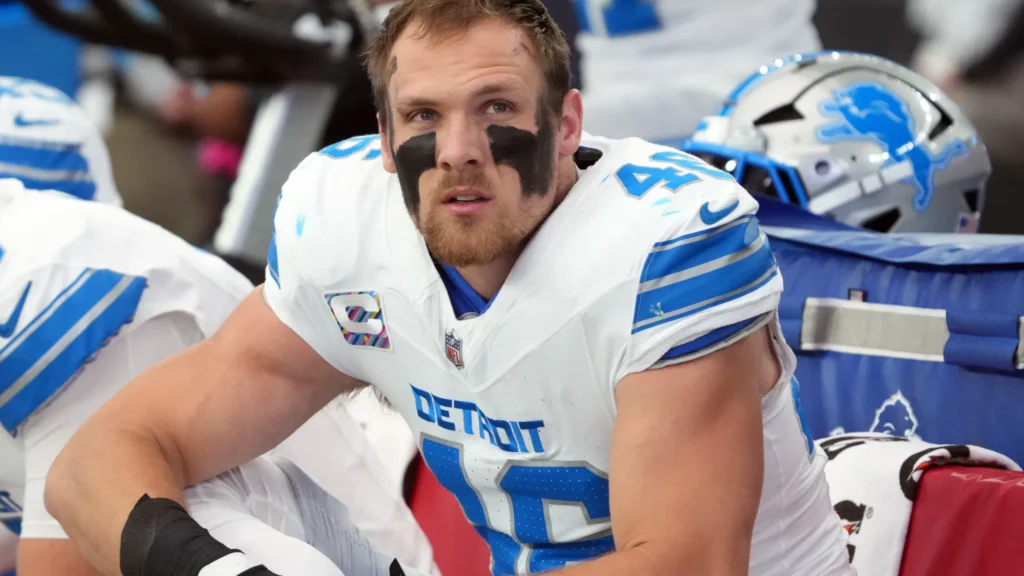
Detroit Lions linebacker Jack Campbell faced a worrying injury during the 19-15 victory over the Minnesota Vikings. The All-Pro defender was taken from the field on a backboard after a collision early in the fourth quarter, prompting an immediate response from medical personnel before his teammates surrounded the cart taking him off.
In a statement released a few days afterward, Campbell provided an encouraging update. He confirmed that he had full movement in his lower body and was making progress with movement in his upper body.
What happened to Jack Campbell?
The injury occurred when Campbell collided with Vikings tight end T.J. Hockenson. Following the impact, the linebacker remained face down on the turf and did not move. Medical staff quickly attended to him, assessed his condition and secured him to a backboard before transferring him onto a cart.
Campbell was alert and breathing when he left the field for hospital evaluation.
Head coach Dan Campbell welcomed the medical update, describing it as positive news and said all the team were “thankful”.
The 2023 first-round draft pick had established himself as one of the main figures in Detroit’s defence. His previous season earned him All-Pro recognition after he became the first NFL player in seven years to record more than 150 tackles alongside at least five sacks and three forced fumbles.
Lions fans who want to see how their team’s odds are affected by injuries can check this betting platform.
How NFL players regain movement after neck injuries
Recovering movement after a neck injury depends on the structures affected, including the vertebrae, spinal cord, nerves and surrounding soft tissue. Doctors establish whether the spinal cord has sustained damage and whether the neck remains stable.
Injuries involving possible spinal involvement need to be managed even more carefully because swelling, compression or damage to nerve pathways can interfere with movement and sensation. Medical teams often use neurological examinations and imaging – CT scans or MRI – to assess the injury.
Early on, the focus is often protecting the neck from further movement until doctors understand the extent of the damage. If imaging reveals instability, staff may advise surgery to stabilize the affected vertebrae or relieve pressure on the spinal cord.
Campbell’s reported return of lower-body movement was encouraging, although it did not establish the full extent of his injury.
Rehabilitation and full return to fitness
When medical assessments permit rehabilitation, recovery generally progresses through carefully supervised stages. The specific programme depends on the diagnosis, symptoms and any treatment required.
For players experiencing nerve-related movement difficulties, physiotherapists may initially concentrate on maintaining joint flexibility and preventing muscle weakness. Gentle, controlled movements can help preserve function without placing unnecessary strain on the injured area.
As recovery progresses, exercises may target muscle activation, coordination and strength. The program may involve resistance bands, controlled limb movements and balance exercises.
NFL athletes also require high-level conditioning before returning to competition. A linebacker like Campbell needs strength and coordination to tackle, absorb contact, change direction and react quickly. Those demands clearly make a return-to-play assessment more extensive than checking whether a player can walk or move their arms.
NFL Draft Diamonds was created to assist the underdogs playing the sport. We call them diamonds in the rough. My name is Damond Talbot, I have worked extremely hard to help hundreds of small school players over the past several years, and will continue my mission. We have several contributors on this site, and if they contribute their name and contact will be in the piece above. You can email me at nfldraftdiamonds@gmail.com