
FROM DEVELOPMENT TO DRAFT DAY: A NEW PROFESSIONAL TRAINING MODEL FOR HBCU FOOTBALL
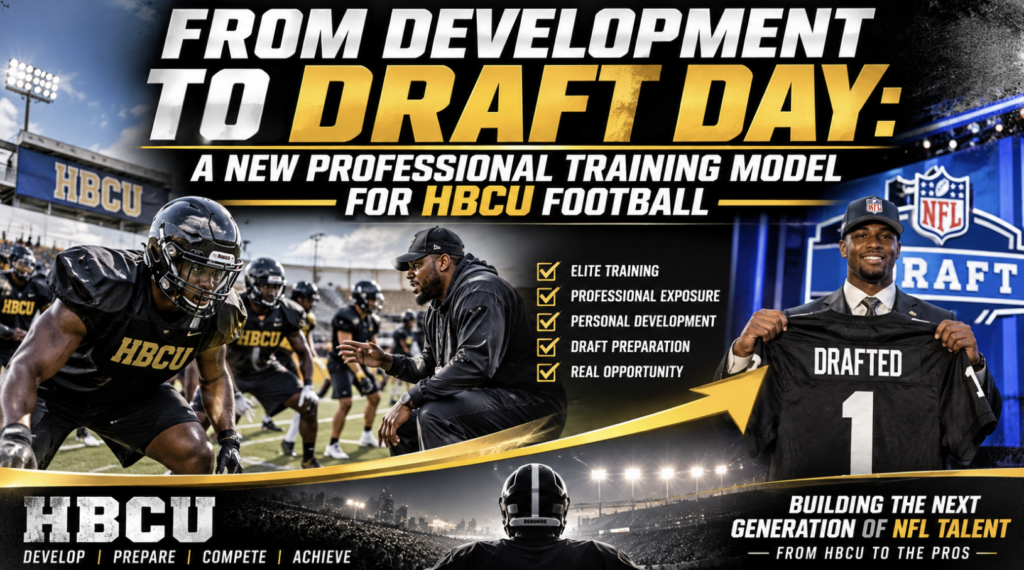
A Pittman’s Pocket Proposal for Professional Position Training, Institutional Investment, and HBCU Athlete Development
Proposed by: Qhawe Brian Pittman Bey
Organization: Pittman’s Pocket HBCU True Freshman All-American
Proposed Initiative: HBCU Professional Position Development Network
Proposed Launch Opportunity: 2027 Allstate HBCU Legacy Bowl Week
I. EXECUTIVE SUMMARY
The future of HBCU football development may depend not only on recruiting talented athletes, but also on providing them with consistent access to specialized training, professional evaluation preparation, and measurable skill development.
Pittman’s Pocket proposes the establishment of an HBCU Professional Position Development Network designed to connect elite independent football trainers, HBCU athletic departments, corporate sponsors, and prospective professional athletes through a shared-service training model.
The objective is to create opportunities for HBCU athletes to receive position-specific instruction before professional evaluation periods, including potential development activities associated with Legacy Bowl week, subject to event approval and applicable rules.
The proposed network would explore specialized instruction in quarterback development, wide receiver technique, defensive line fundamentals, and other critical football positions.
Three potential professional training profiles illustrate the concept:
- Coach Tony Ballard, known as “The Quarterback Sherpa,” for quarterback development.
- James Everett Jr., known as “Route God,” for wide receiver route-running and technical development.
- Cam Spence, known as Coach Bear, for defensive line development, subject to his university employment obligations and any required approvals.
These individuals are proposed examples of specialized coaching expertise, not confirmed participants or endorsers of this initiative.
The broader objective is to establish a financially sustainable professional training network that improves access to specialized coaching, creates legitimate business opportunities for trainers, and strengthens the development infrastructure available to HBCU football programs.
II. THE MAJOR PREMISE AND MINOR PREMISE
Major Premise
When athletes receive access to qualified position coaches, structured training, technical feedback, and measurable performance assessments, they gain additional opportunities to improve their skills and demonstrate their abilities to professional evaluators.
Minor Premise
HBCU football programs produce talented athletes, but the financial and personnel resources available for specialized position training, professional preparation, and individualized development vary considerably among institutions.
Application
A shared HBCU training network could pool institutional resources, negotiate professional service agreements, obtain corporate sponsorships, and establish recurring training opportunities for participating athletes.
Conclusion
A properly organized HBCU Professional Position Development Network could improve access to specialized training, strengthen institutional development capacity, create additional revenue opportunities for participating trainers, and help athletes prepare for professional football evaluations.
The effectiveness of this model should be measured through actual training results, athlete participation, institutional costs, and professional opportunities rather than assumptions that training alone guarantees a draft selection or professional contract.
III. THE PROPOSED TRAINING PARTNERS
A. QUARTERBACK DEVELOPMENT — COACH TONY BALLARD
Coach Tony Ballard, known as “The Quarterback Sherpa,” is identified in the proposed concept as a quarterback development specialist associated with Football University.
The quarterback training component would explore instruction in:
- Throwing mechanics and release consistency.
- Footwork, pocket movement, and balance.
- Timing, anticipation, and ball placement.
- Reading defensive coverages and decision-making.
- Film study and individualized technical evaluation.
The objective would be to provide participating HBCU quarterbacks with targeted instruction and feedback before important evaluation opportunities.
B. WIDE RECEIVER DEVELOPMENT — JAMES EVERETT JR.
James Everett Jr., known as “Route God,” represents a potential specialized wide receiver training component.
The proposed curriculum would explore:
- Route precision and timing.
- Release techniques against press coverage.
- Separation and change of direction.
- Ball tracking, catching technique, and body control.
- Route adjustments and professional-level technical expectations.
The goal would be to help participating receivers refine their technical execution and demonstrate measurable improvement through film and position-specific assessments.
C. DEFENSIVE LINE DEVELOPMENT — CAM SPENCE, KNOWN AS COACH BEAR
Cam Spence is associated with Bear Spence Academy and serves as a collegiate defensive line coach at Georgia State University, according to the profile used in developing this proposal.
His background illustrates the value of specialized defensive line development involving:
- Hand placement and strike timing.
- Leverage, pad level, and first-step explosiveness.
- Pass-rush counters and block recognition.
- Run-defense techniques and gap responsibility.
- Film evaluation and individual performance assessments.
Because Coach Spence holds a university coaching position, any proposed participation must remain separate from his institutional responsibilities and be subject to university approval, applicable employment restrictions, and relevant NCAA and conference requirements.
His professional profile is included to illustrate a potential area of expertise, not to imply that he has agreed to participate.
IV. WHY LEGACY BOWL WEEK PRESENTS A STRATEGIC OPPORTUNITY
The Allstate HBCU Legacy Bowl provides a concentrated setting for HBCU prospects to compete, develop, and pursue professional football opportunities.
Pittman’s Pocket proposes exploring a complementary professional-development initiative around Legacy Bowl week, subject to the event organizers’ approval.
The proposed initiative would not replace official practices, duplicate existing evaluations, or interfere with established team activities.
Instead, it would explore opportunities for independent trainers to provide additional, voluntary position-specific development before or outside official event activities.
Potential components include:
- Small-group position training.
- Individualized film review.
- Technical performance assessments.
- Before-and-after development reports.
- Professional preparation workshops.
- Connections between participating athletes, trainers, and interested institutional representatives.
This model could help establish a more structured connection between college football development and the transition to professional opportunities.
V. A YEAR-ROUND HBCU POSITION DEVELOPMENT MODEL
The initiative should not be limited to one week each year.
Pittman’s Pocket proposes exploring recurring training opportunities during four development windows.
Spring Development Period
Participating institutions identify athlete development priorities and establish baseline technical assessments.
Summer Development Period
Athletes receive position-specific instruction, film review, and measurable skill-development evaluations.
Preseason Preparation Period
Participating programs explore supplemental technical sessions coordinated around institutional schedules and existing coaching responsibilities.
Professional Evaluation Period
Eligible athletes preparing for professional showcases, all-star events, and other evaluation opportunities receive targeted technical preparation.
The program should remain voluntary, accessible, and structured around each institution’s needs, athlete eligibility, and available funding.
VI. PROPOSED PILOT PROGRAM BUDGET
The following budget is an illustrative planning model, not an actual quote or commitment from any named trainer.
Quarterback specialist: $4,000
Wide receiver specialist: $4,000
Defensive line specialist: $4,000
Additional position or skills specialist: $3,000
Field rental and equipment: $2,000
Travel and lodging: $3,000
Film, testing, and performance reports: $1,500
Insurance, administration, and contingency: $2,500
TOTAL PROPOSED PILOT BUDGET: $24,000
The proposed pilot would allow the organizers to evaluate the feasibility of a small-group training program before expanding to additional institutions.
Actual costs would depend on negotiated rates, participant numbers, travel requirements, facility arrangements, insurance, and the services ultimately approved.
VII. PROPOSED INSTITUTIONAL FUNDING MODEL
A shared-service funding model could reduce the need for each HBCU to negotiate and finance every specialized training service independently.
For example, a hypothetical annual funding target of $240,000 could be structured as follows:
Twelve participating institutions contributing $10,000 each: $120,000.
Corporate sponsorships: $80,000.
Donations and grants: $40,000.
TOTAL ILLUSTRATIVE ANNUAL FUNDING: $240,000
These figures represent a proposed funding scenario and do not reflect secured commitments.
Institutions with limited financial resources could be supported through sliding-scale contributions, sponsor-funded participation, philanthropic grants, and designated athlete-development scholarships.
The long-term goal would be to expand access without making financial contribution a prerequisite for an athlete to receive consideration for a development opportunity.
VIII. CREATING A SUSTAINABLE PROFESSIONAL TRAINING MARKET
The economic opportunity extends beyond the individual training session.
A structured HBCU professional-development network could create recurring institutional contracts, negotiated group rates, sponsored training clinics, and additional opportunities for independent trainers to serve athletes across multiple programs.
A hypothetical annual service model could include:
Thirty-six institutional sessions at $2,000 per session: $72,000.
Four specialized development clinics at $5,000 each: $20,000.
Forty individual development packages at $500 each: $20,000.
TOTAL ILLUSTRATIVE GROSS SERVICE REVENUE: $112,000
This figure represents hypothetical gross revenue across a proposed program before trainer compensation allocations, travel, insurance, staffing, equipment, taxes, and other operating expenses.
The purpose is to illustrate how institutional contracts and recurring development services could complement a trainer’s existing business.
The initiative should pursue a competitive professional-services network rather than a restrictive monopoly. Multiple qualified trainers should have opportunities to participate under transparent standards, reasonable contracts, and clearly defined service expectations.
The network should promote quality, affordability, and accountability without restricting athlete choice or excluding competing providers.
IX. BENEFITS TO HBCU ATHLETES AND INSTITUTIONS
Benefits to Athletes
- Greater access to specialized position instruction.
- Individualized technical feedback.
- Documented development and performance assessments.
- Additional preparation for professional evaluations.
- Potential sponsor-funded training opportunities.
Benefits to HBCU Institutions
- Shared purchasing power.
- Access to specialized coaching expertise.
- More consistent athlete-development planning.
- Performance data that can inform future investment.
- Opportunities to strengthen professional development resources without independently financing every service.
Benefits to Professional Trainers
- Institutional service agreements.
- Additional clients and recurring business opportunities.
- Broader access to HBCU football talent.
- Opportunities to provide paid clinics and technical evaluations.
- A structured platform for demonstrating professional expertise.
Benefits to Corporate Sponsors
- A defined investment in athlete development.
- Opportunities for responsible brand visibility.
- Measurable program participation and service delivery.
- Support for HBCU football and professional opportunity development.
X. MEASURING PERFORMANCE AND ACCOUNTABILITY
The initiative should begin with a one-year pilot and a manageable number of participating HBCUs.
The program should measure its performance through the following categories:
Technical Development: Pre- and post-training assessments, film comparisons, and documented improvements in position-specific skills.
Institutional Participation: Number of participating schools, athletes served, and sponsored training places provided.
Financial Accountability: Actual program expenses, cost per athlete, trainer compensation, sponsorship retention, and funding sustainability.
Professional Opportunities: Verified tryouts, camp invitations, professional evaluations, and contracts.
Program Quality: Attendance, athlete feedback, trainer deliverables, and adherence to agreed standards.
Draft selections should be tracked as one outcome among several. Training alone cannot guarantee selection, and professional opportunities depend on numerous additional factors.
The program should also undergo appropriate review for athlete eligibility, NCAA and conference requirements, school policies, NIL implications where applicable, insurance, participant safety, and any necessary employment or event approvals.
XI. IMPLEMENTATION AND PARTNERSHIP STRATEGY
Pittman’s Pocket proposes the following initial steps:
- Prepare a formal concept paper for interested HBCU athletic departments and potential sponsors.
- Contact prospective trainers to obtain interest, credentials, availability, and written service proposals.
- Identify an initial group of participating HBCUs.
- Approach the appropriate Legacy Bowl organizers regarding permissible supplemental development activities.
- Develop a transparent budget and identify potential funding sources.
- Establish participation standards, training objectives, and measurable performance indicators.
- Conduct a pilot program and evaluate its results before expanding.
No trainer, school, sponsor, or event organizer should be represented as a confirmed partner until a formal agreement has been reached.
XII. CONCLUSION: INVESTING IN DEVELOPMENT BEFORE DRAFT DAY
HBCU football development requires more than identifying talent. It requires a sustained commitment to preparing athletes, supporting institutions, and creating opportunities for professional advancement.
Pittman’s Pocket proposes exploring a professional position-training network that connects specialized coaching expertise with HBCU athletes through recurring development opportunities, shared institutional funding, and measurable performance standards.
The profiles of Coach Tony Ballard, James Everett Jr., and Cam Spence illustrate the potential value of specialized quarterback, wide receiver, and defensive line development.
The initiative would seek to compensate participating trainers fairly, expand access to professional-level instruction, and help HBCU programs invest in athlete development more consistently.
The goal is not to promise draft selections or professional contracts. It is to establish a more accessible, accountable, and sustainable pathway for HBCU athletes to improve their skills and pursue professional opportunities.
Pittman’s Pocket believes that HBCU talent deserves development infrastructure that recognizes its potential, supports its preparation, and strengthens the institutions responsible for developing it.
PROPOSED BY:
Qhawe Brian Pittman Bey
Founder, Pittman’s Pocket HBCU True Freshman All-American
HBCU Football Development, Evaluation, and Professional Opportunity
Proposed initiative: HBCU Professional Position Development Network
Proposed launch opportunity: 2027 Allstate HBCU Legacy Bowl Week
This document is a proposal for discussion and planning. All budgets are illustrative. All potential partnerships, trainer participation, event access, and funding arrangements remain subject to verification, negotiation, and formal approval.

Worked as a Scout and volunteer for the East n West Shriners game in 2016-2017.
Also attended the Hula bowl and Tropical Bowl games. 2022
Also was a independent Agent and Scout at the CGS bowl game in 2021.
Worked All star games like the EPS All-Americans game in 2017.