
How NIL and Revenue Sharing Are Reshaping NFL Rookie Contracts
This week has seen a flurry of contract activity across the NFL, particularly involving second-round draft picks. Finalizing these deals before training camp fully kicks off was imperative for all parties involved.
The Bears locked up defensive tackle Shemar Turner from Texas A&M and offensive tackle Ozzy Trapilo from Boston College. The Ravens came to terms with edge rusher Mike Green out of Marshall. The Commanders reached a deal with cornerback Trey Amos from Ole Miss, and the Broncos signed running back RJ Harvey out of UCF. The Lions finalized a deal with offensive guard Tate Ratledge from Georgia. The Cowboys agreed to terms with edge rusher Donovan Ezeiruaku from Boston College. The Seahawks also signed tight end Elijah Arroyo out of Miami. One of the most notable signings came from the Chargers, who finalized a deal with wide receiver Tre Harris from Ole Miss.
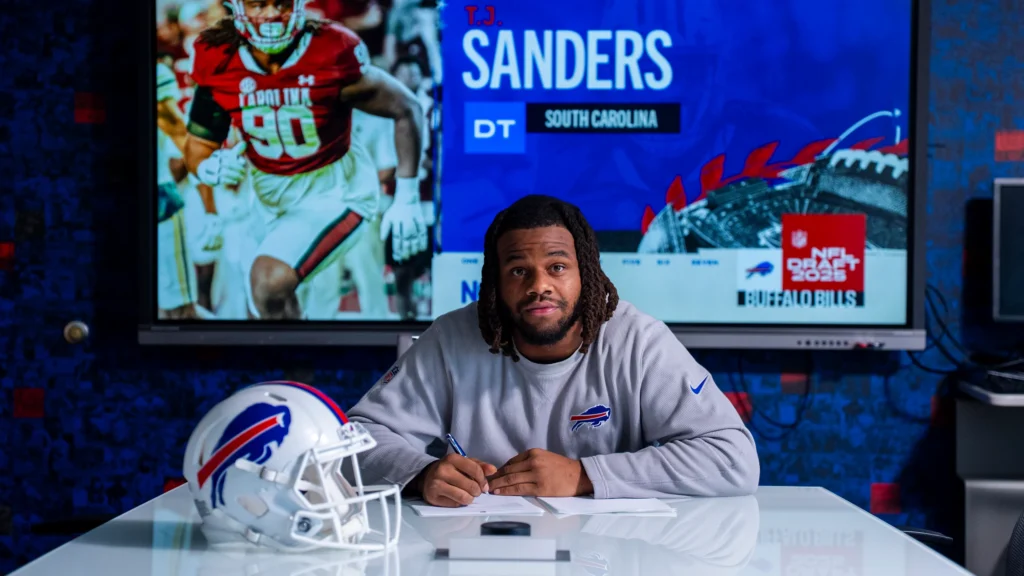
This wave of agreements followed the 49ers’ deal with defensive tackle Alfred Collins from Texas, which helped break a second-round signing logjam. The delay in deals stemmed largely from former Iowa State wide receiver Jayden Higgins, who agreed to a deal with the Texans to become the first second-round pick in NFL history to receive a fully guaranteed rookie contract. Shortly after, the 33rd overall pick, former UCLA linebacker Carson Schwesinger, agreed to a deal with the Browns that was also fully guaranteed. This set off a ripple effect as other second-round selections began to request, and in some cases, hold out for comparable financial terms. Additionally, former South Carolina safety Nick Emmanwori agreed to a fully guaranteed contract with the Seahawks, joining the growing list of second-round picks securing unprecedented guarantees. Meanwhile, former South Carolina defensive tackle TJ Sanders agreed to a deal with the Bills that is mostly guaranteed. Following that, former LSU tight end Mason Taylor agreed to a deal with the Jets that guarantees 91.3% of his contract. Every one of these second-round pick contracts features a level of guaranteed money that stands out as either unusual or unprecedented, signaling a significant shift in how rookie deals are both negotiated and valued.
This marks a pivotal moment in the evolution of rookie contract negotiations and is directly tied to the rise of NIL (Name, Image, and Likeness) deals and revenue sharing in college athletics. These relatively new developments have reshaped the landscape of amateur and professional sports, particularly in football.
To understand the significance, consider this, the 2021 NFL Draft class was the last group of rookies to enter the league before NIL became legal on July 1, 2021. This is why Tyson Campbell, the 33rd overall pick in 2021, is used as a critical benchmark in this discussion. His contract featured 66% guaranteed money, which was considered standard for high second-round picks at the time. In contrast, Carson Schwesinger’s fully guaranteed contract shows how dramatically the market has shifted in just four years.
Carson Schwesinger’s total rookie contract is valued at just under $11.8 million over four years, or approximately $2.95 million per year. If only 66% of that contract were guaranteed, as was the case for Campbell, Schwesinger would have about $7.8 million in guaranteed money or roughly $1.95 million per year.
Now, compare that to what some players are making in college under NIL agreements. Top prospects at major programs can earn well over $1 million annually in some cases, approaching or surpassing the $2 million mark. With revenue sharing now on the horizon, those numbers are poised to rise.
This creates a unique dynamic where players who are already financially secure, thanks to NIL deals and school-specific collectives, enter the NFL with more negotiating leverage than ever before. They’re no longer dependent on their rookie contracts to achieve financial stability. Instead, they can afford to be strategic, patient, and demand terms that reflect their true market value.
Moreover, players, families, agents, and advisors are becoming more financially literate and legally savvy. They understand the implications of partial guarantees, offset language, and cash flow timing. These stakeholders are approaching negotiations with greater scrutiny because they’ve seen promises go unfulfilled, not only from college programs but from teams and organizations across the board.
This shift is not just about money, it’s about power, leverage, and long-term planning. College athletes have witnessed how institutions and organizations can fall short on their commitments. As a result, they are now demanding protections, securities, and guarantees that go beyond traditional rookie deal frameworks.
Some critics argue that this trend will happen regardless of NIL or revenue sharing. While it’s true that contract evolution is inevitable, the data shows that NIL has clearly accelerated this transformation. Without NIL, players entering the league might not have the financial backing or confidence to negotiate so aggressively. In fact, some players might have more earning potential by staying in school for another year, a scenario unheard of prior to 2021.
What we’re witnessing is a new era in the sports business. NIL and revenue sharing have introduced a paradigm shift, and the NFL is feeling its impact. Contract negotiations are becoming more complex, players are more empowered, and front offices are being forced to adapt.
Ultimately, this is a win for athletes. They are no longer passive recipients of opportunity, they are active participants in their careers and financial futures. As NIL continues to mature and revenue sharing expands, expect to see more disruptions to the traditional structures that once governed college and professional football.
The ripple effects have only just begun.

Joshua Parker is a sports management student with a concentration in sports analytics, currently interning with NFL Draft Diamonds, where he contributes football-related content focused on team building, roster management, and draft analysis. Passionate about the business side of sports, Joshua aspires to work in an NFL front office, utilizing data-driven insights to enhance team success. In addition to his internship, he runs his own sports blog, Joshua Speaks Sports, where he provides in-depth analysis of player trends and league developments. Dedicated to continuous learning and professional growth, he is actively building his expertise in scouting, analytics, and front-office operations to make a lasting impact in the industry.