
How the NFL Is Using Next Gen Tech to Track Every Play at Levi’s Stadium
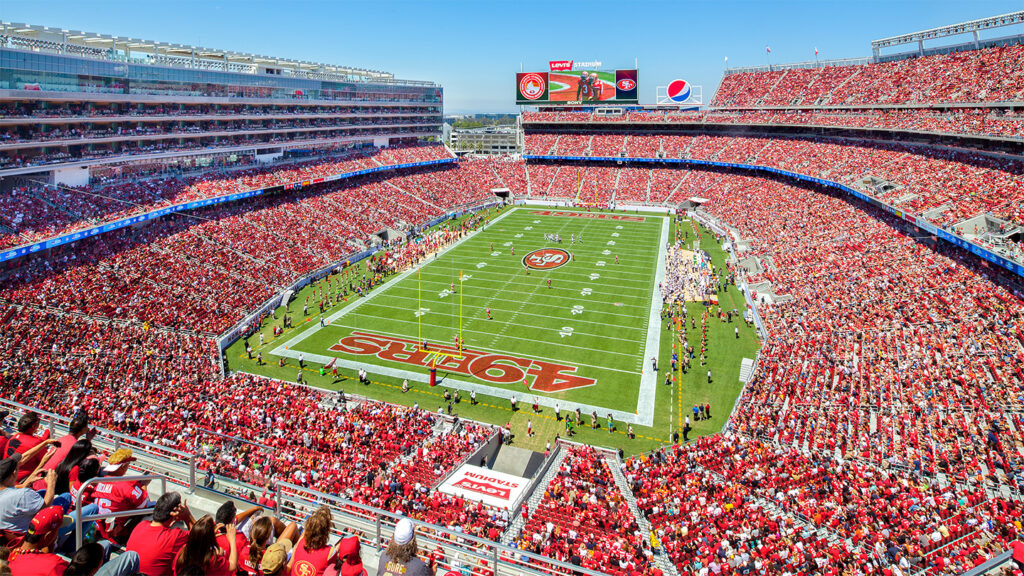
The NFL is evolving at breakneck speed, and it is thanks to a number of technological additions that are keeping the on-field and off-field experience new. Now more than ever, the coaching staff, players, and fans, whether in the stadium or watching from home, have access to technologies that let them get into the nitty-gritty of the sport. But what are some of the ways technology is shaping the NFL, and how is every play tracked by next-gen tech?
The Power of Data in the NFL
NFL teams are always looking for ways to outdo the competition, and data has recently become the field where wars are won or lost. Top teams like the San Francisco 49ers are employing different technologies that allow them to extract data on the field. This information can then be translated into training schedules and team strategies to improve their chances of success.
Fans of the sport understand the importance of having timely, accurate data, and it is no different for the NFL teams. Blockchain, for example, has permeated several sports betting sites, enabling access to real-time data and tamper-proof record-keeping. It ensures transparency while remaining safe for players through advanced encryption and other security features engineered to give patrons an edge. Sites that employ blockchain provide verifiable timestamps for the odds offered, when wagers are placed, and when wins are honored, creating a trustless system between operator and player thanks to the immutable data trail.
One of the most popular devices being employed by the San Francisco 49ers, and frankly, other teams in the NFL, to collect crucial data is RFID (Radio Frequency Identification) sensors. These sensors are part of the league-wide partnership with Zebra Technologies in 2014/15. They are small tags embedded in the player’s shoulder pads, and together with 20-30 ultra-wide band receivers installed around Levi’s Stadium, allow the system to pinpoint the location of all the players accurately to within a few inches.
Beyond providing player location, it also allows the coaching staff to know how fast the players are going, acceleration and deceleration too, how much of the field they have covered, and how they are combining with teammates. Useful data that can be used to refine strategies, prevent injuries, and manage player fatigue.
Improved Fan Experience
Collecting data is not just for the team; it has, over time, proven to be one of the reliable ways the NFL improves fan experience. Many fans are not content with just the result or the win; they want behind-the-scenes access to see which players are performing and which need more support to find their form on the field. Having access to this data makes these fans feel like part of the team rather than passive bystanders.
In addition to providing fans with numerous data points, Levi’s Stadium features state-of-the-art technology that enhances the fan experience as they watch their favorite players live. The first encounter fans have with these technologies at the stadium is the 1,700 high-tech beacons placed throughout the stadium to help them find seats. Powered by the latest versions of the Bluetooth Low Energy Standard, getting lost looking for seating has now become a thing of the past for fans of the 49ers.
Every football fan knows the importance of sharing the good and bad moments, as evidenced by a 37% surge in mobile usage at NFL stadiums. The 49ers’ management knows this, too, which is why the stadium allows over 70,000 fans to connect to high-speed 4G networks and WiFi to allow them to stay connected throughout the experience, making for an enjoyable watch. Dan Williams, the Vice President of technology for the Levi’s Stadium, says that of the 400 miles of cabling that were laid out in the stadium, over 70 miles are for the 1K+ antenna systems that power the Wi-Fi routers, with each router strategically spaced out to serve every 100 seats throughout the stadium.
Levi’s Stadium’s 40 gigabits per second bandwidth is four times the standard for NFL stadiums set by the league in a 2015 directive. It provides 40 times the bandwidth of any stadium in the US and can be scaled to accommodate even larger event attendance.
Conclusion
The combination of RFID tracking, ultra-fast connectivity, and real-time analytics at Levi’s Stadium signals a fundamental shift in how professional sports operate. As other NFL venues rush to match these capabilities, the competitive advantage will belong to teams that best translate raw data into actionable strategy.

NFL Draft Diamonds was created to assist the underdogs playing the sport. We call them diamonds in the rough. My name is Damond Talbot, I have worked extremely hard to help hundreds of small school players over the past several years, and will continue my mission. We have several contributors on this site, and if they contribute their name and contact will be in the piece above. You can email me at nfldraftdiamonds@gmail.com