
Why It’s Worth Looking at Online Gambling and Fantasy Sports as an Increasingly Overlapping Field
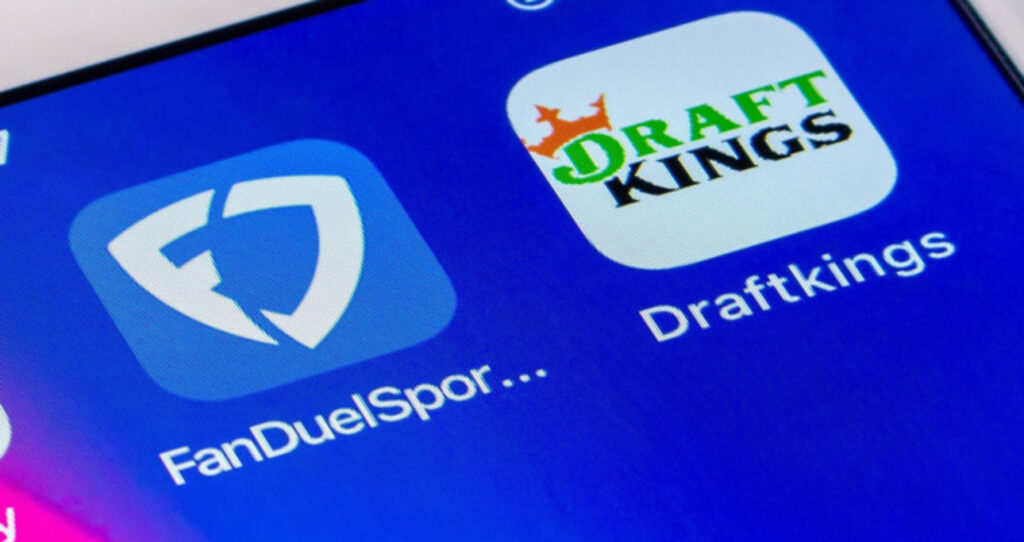
One of the most interesting ways in which we can understand sports viewership is through its consumption of fan engagement. Since playing sports at an amateur, casual level is becoming increasingly difficult due to time constraints and costs, many have pivoted toward other avenues that allow them to relate to sports.
In this case, we are talking about what we understand as the sports product. From this point of view, we’re referring to professional sports, which you see in various leagues and pro circuits, but also semi-professional sports. The collegiate circuit is, in theory, amateur, but the NIL era has made it so that players are almost like employees who also happen to study.
Given that the pool of options for sports entertainment is so large and diverse, there are various methods of piggybacking on this trend, which has opened the door for both fantasy service providers and sports betting bookmakers in the online sphere. The consumer can pick and choose, which is an opportunity made feasible by regulatory relaxation.
In this article, we will talk about a new part of this particular development: the fact that these two start to overlap. Companies have started to integrate both within the same product, and the existence (and rise) of prediction markets is creating an even more fascinating convergence. We are here to explain why this overlap is so significant within the industry.
Fundamental differences that need bridging
The best way to assess the profile of these fan engagement products is to discuss their differences first. It allows us to understand the wayward points where they come from, and why their convergence is such an eventful development.
As you may know, the main differentiator is their definition, which begins under the law. Sports betting, as part of online gambling, falls under the categorization of being a game of luck. Its status as gambling means that there must be a consideration (the bet), which use use to wager on odds, and for a real-money prize.
Fantasy sports fall under the category of a game of skill. It means that your decision-making is the direct methodology that affects and impacts your standing within a fantasy league. Given that it may or may not yield a prize of real-world significance (i.e., real cash), it doesn’t qualify as gambling because it lacks both the consideration and the prize (in some cases, at least).
In the USA, where the main market of sports fantasy is at its most popular according to this statistical set, different sets of regulations exist that vindicate both products. The UIGEA, a decision made in 2006, tightly regulated online gambling before 2018’s PASPA made it legal, but fantasy sports were the notable exception from that regulatory set, which opened the door for its rise in the absence of legalized sports betting on the online side of things.
What happened is that platforms like DraftKings and FanDuel rose to extreme prominence throughout this space, especially with their daily fantasy sports (DFS) models. However, with the highly intense rise of sports betting following the 2018 landmark regulatory decision that also made promotional packages of the 30 free spins no deposit type possible, online gambling and DFS have entered a similar space that, unsurprisingly, started to converge in the effort of providing an all-in-one consumer platform with intense integration.
Fintech payment opportunities to bring efficiency through integration
Fintech is the herald of increased accessibility and provable upside in the world of finances, which is why we’re seeing more and more competitive services and products on this side of technological innovation developments. Naturally, its entry into the world of online gambling has been pivotal.
By leveraging lightning-quick payments through personal recognition and ensuing identification, fintech makes it easy and safe to move money around. Its usage of APIs, biometric data, and direct payments ensures that a platform that integrates fantasy and gambling can quickly determine if the account that tries to make a payment belongs to a player whose identity matches regulatory requirements.
For online gambling to act as a step-up from the traditional fantasy model, it needs to guarantee the elimination of money laundering and, especially, minor gambling.
As such, the usage of fintech models makes it so that the gambling platform can instantly recognize your identity as an adult, complete the payment, and differentiate whether you are eligible for betting and games of luck, or if fantasy is the proper solution.
If you want to engage in an activity that provides the type of entertainment that you’re seeking, a well-integrated API that collaborates with the fintech solution can recommend and/or redirect fantasy as an alternative to you not being eligible for online gambling!
Real-time data usage and the role of AI
Nowadays, data usage has become both indispensable and inevitable. Any online gambling or fantasy operator (in some cases, both) must do its earnest to make sure that they know their audience and clientele in the effort of providing personalized services that work in the interest of their customers.
The usage of datasets has various advantages for operators of fantasy and sportsbooks, especially in the interest of integration. Given that both DraftKings and FanDuel are a duopoly with 67% of the market share, their ability to work to welcome the same audience within a platform allows them to understand what their clientele prefers.
Using this level of real-time data is the type of tool that allows operators to determine the preferences of their clientele, including the sports they like to bet on, the type of trades they prefer making in fantasy, the money that they bankroll their bets with, and the frequency of activity that they exhibit on their accounts.
Based on such data, including demographics-based information, operators can use their models to provide suggestions for moves, raise flags of concern in cases of exaggeration, and even leverage tailor-made promotional content.
Given that this data provides clarity regarding preferences, it serves the overlap of fantasy and traditional betting because it can steer and shape its services in a way that aligns with the interests of the consumer.
Naturally, the effectiveness of data-leveraging depends on the correctness of its suggestions, especially when chasing operational efficiency. This means an AI model that fits this bill is almost indispensable, and the data from players is extremely useful from this point of view, as well!
Inescapable blockchain entry
While crypto gambling is something that is not an accepted solution when it comes to traditional sports betting regulations and models, the prediction market product has become so popular that people are increasingly focused on this type of activity.
This should tell you that cryptocurrencies may be on their way to general online sports betting as well.
Given that crypto has been at the forefront of many interests, including political ones, its understanding from official authorities, not to mention their efforts to rein it in, may lead to its integration in wider aspects of society, and gambling, a very popular pastime where it’s legal, may be part of this integration.
If we get to that point, it shouldn’t be surprising at all if we see crypto become part of the zeitgeist of fantasy sports, especially when used for rewards reserved for league winners. As such, it can be a point of commonality that, at the rate of the current digitalization, feels inevitable.
Conclusion
To close out this article, the situation at hand mostly shows us that the convergence of fantasy sports and gambling mostly boils down to their integration within single platforms with multiple products.
As such, they can partake in an effort of market expansion, especially given that their target audiences are quite the same. Regardless of what you choose, remember to gamble responsibly!
NFL Draft Diamonds was created to assist the underdogs playing the sport. We call them diamonds in the rough. My name is Damond Talbot, I have worked extremely hard to help hundreds of small school players over the past several years, and will continue my mission. We have several contributors on this site, and if they contribute their name and contact will be in the piece above. You can email me at nfldraftdiamonds@gmail.com