
The Silent Shift: How College Football’s New Rules Are Redefining the ‘Pro-Ready’ NFL Prospect
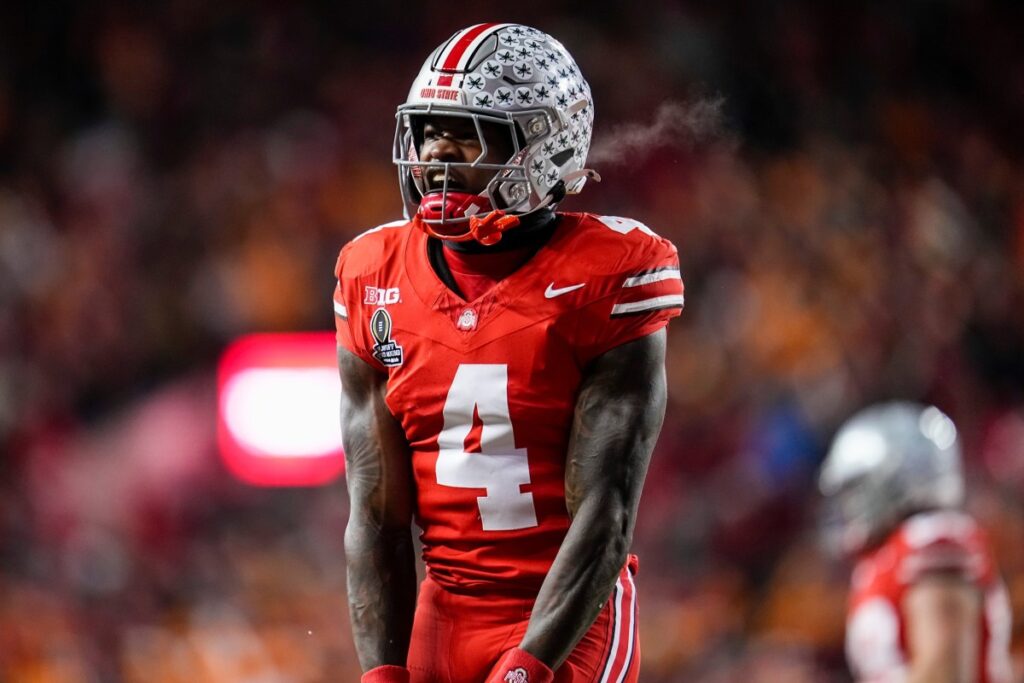
College football quietly rewired a few parts of how the game is officiated — and the ripple effects reach straight into the NFL draft room. Small-sounding things (lose a timeout for a suspicious injury, stop clapping to bait a false start, allow a single green-dot helmet, and treat the “T” signal on kickoffs as a dead ball) are changing what tape looks like. Scouts used to watch for flash — now they’re grading consistency, discipline, in-game processing and measurable stamina in a new way.
The Anti-Flopping Effect (Fake Injuries)
The Rule
If medical personnel enter the field to attend to a player after the ball has been spotted for the next play, that team is charged a timeout — and if it has none left, a 5-yard delay-of-game penalty is assessed. The intent: discourage teams from using “injuries” to slow the clock or disrupt a fast-paced offense.
On-field consequences
Referees are now empowered to treat suspicious injuries as a tactical clock play. Expect players who go down to be required to leave the field for trainer evaluation (and in many interpretations, sit out at least one snap), which makes trick usage riskier and more obvious. That behavior used to be a hidden play-clock weapon — now it’s a clear negative on tape.
Draft angle: Stamina becomes a stat
Here’s the interesting pivot: when you remove the “stop the clock” safety valve, defensive players must sustain pace and effort for longer drive segments. NFL clubs prize “motor” and durability — but until now those were largely qualitative notes in scouting reports. These rules make stamina and consistency observable in-game: who still gets consistent pressure in the fourth quarter? Who still wraps tackles on play 60 vs play 6? Scouts will increasingly quantify that with a kind of “stamina grade” — a snap-by-snap evaluation that becomes another pro-readiness metric.
Disconcerting Signals & Pre-Snap Movement (Discipline)
The Rule
The committee tightened rules against players (on either side) using claps, words, or exaggerated movement to imitate the opposite side’s cadence or to induce a false start. Players within one yard of the line can’t make abrupt, exaggerated actions designed to cause a foul — these are now dead-ball, delay-of-game type infractions.
Why technique now out-scores tricks
If you used to rely on baiting the OL with a hop, clap, or “movement” to earn a free look, you’ve lost that tool. That means pass rushers and defensive ends need better technique at the snap — hand usage, initial bend, first-step explosion — because you can’t hide behind deception as easily anymore. It’s like taking training wheels off: if you can’t fake it, you either build real technique or you become a situational player.
Draft angle: reaction time, clean technique, and composure
Scouts will reward edge defenders who win with fundamentals — clean reps, low false-start/penalty rates, and fast reaction without cheating. A prospect who consistently avoids pre-snap penalties while producing pass-rush wins looks more “NFL-translatable” than a flashier player with a laundry list of pre-snap fouls.
The Technology Leap: Helmet Comms
The Rule
Coach-to-player helmet communication (the green-dot system) was made permissive at the FBS level and has expanded into the FCS and beyond — with the typical safety: one player wears the receiver and communications end with 15 seconds on the play clock or at the snap, whichever comes first.
QB advantage: in-game communication experience
This is the most direct “pro-ready” accelerator. QBs who run an offense while literally hearing the coach in their ear for a season learn tempo, cadence, and in-game adjustments in a pro-like setting. When they step into the NFL — where helmet commsare standard — they’ve already handled the cognitive load of hearing and executing complex audible and protection calls under pressure. That is a tangible scouting checkmark.
Other positions: ID, checks, and situational reads
It’s not just QBs. A green-dot center, safety, or linebacker who coordinates protections and adjustments via headset becomes more valuable because they’ve practiced communication hygiene: short, precise reads; fast relays; and lower incidence of miscommunication on high-leverage plays.
The ‘T’ Signal on Kicks (Special Teams Evaluation)
What changed on returns
Referees are treating the “T” signal (an arm signal some return teams used to indicate they’d let the ball roll into the end zone) like a dead-ball action in many officiating interpretations — effectively ending live kickoff returns in those cases. That reduces the number of high-speed kick returns in-game.
Draft angle: fewer live kick returns, alternate evaluation methods
With fewer live returns, scouts have less tape to evaluate return instincts in real games. That pushes evaluation toward special teams snap data (how often a player breaks a block), combine/pro day speed and agility metrics, and punt return tape. Small-school speedsters who previously made pro lists on a handful of electric kick returns now need to show explosiveness in other settings or through special teams coverage performance.
Position-by-Position Impact
Defensive Line / Edge
Less pre-snap deception and fewer stoppages mean DLs who can maintain rush quality late in drives — with clean technique — will climb draft boards. Pressure-over-trick players will be exposed.
Linebackers
They must show sustained run-fit discipline and coverage stamina. Fake-injury prevention forces more continuous reps, so tacklers who fade late will be downgraded.
Cornerbacks & Safeties
With fewer chaotic returns and less trickery at the LOS, DBs that show consistent tackling and steady man-coverage snaps will stand out more than one-play-highlight guys.
Quarterbacks
The helmet comms advantage for QBs is huge. Those with in-helmet experience arrive at the NFL already practiced in play-clock management, cadence discipline, and coach communication.
Specialists & Returners
Fewer kickoff returns = less tape; speed and agility testing and punt return reps become more valuable proxies for draft evaluation.
How NFL Scouts Are Adapting
New metrics scouts will favor
Expect to see formalized metrics enter scouting databases: a “stamina grade” (fourth-quarter pressure/value), a “penalty avoidance” score (pre-snap infractions), and a “communication/decision” score for QBs (how often they process and execute complex in-helmet reads without miscommunication). These aren’t just buzzwords — the new rules make them observable and comparable.
Film-room checklist: what to watch now
• Snap 1 vs snap 50 comparison for effort and technique
• Pre-snap behavior (no baiting penalties)
• QB headset responses and tempo management in clutch moments
• Special teams usage outside of kickoff returns (punt returns, coverage lanes)
How Prospects Can Adapt
Training & measurable tests
Workouts should emphasize repeatability under fatigue: go-to drills that simulate four-quarter exertion (short sprint sets, repeated pass-rush bursts, 10-yard explosion drills at the end of practice). Add in situational communication drills for QBs and defensive leaders.
On-field behaviors that scream ‘pro-ready’
Be the player who avoids pre-snap penalties, finishes plays, and communicates cleanly. That means fewer showy stunts and more consistent fundamentals. In a world that penalizes the cheap stop, reliability becomes a premium.
Practical Takeaways for Teams, Agents & Prospects
• Scouts: prioritize snap-by-snap grading and late-game film.
• Prospects: demonstrate sustained effort in practice and games; practice purposeful communication.
• Agents: push pro-style game tape (helmet comms, long-drive performance) during early meetings
And for fans tracking the process from home, it’s worth remembering to stay protected while following the NFL Draft online, since streaming, live-tweeting, and browsing draft analysis often come with a flood of pop-ups, phishing attempts, and sketchy links..
Conclusion
Rule tweaks that looked like modest administrative cleanups have a bigger side effect: they compress the gap between college and pro evaluation by making certain pro traits — stamina, discipline, technique, and the ability to process coach communication under pressure — easier to observe and measure. The college game is quietly training a slightly different kind of pro-ready player: one who wins by doing the little things consistently rather than by manufacturing brief, flashy advantages. For prospects, that’s good news: being reliable, communicative, and fundamentally sharp now outperforms cleverness that bends the rulebook.
FAQs
Q1: Will these rule changes hurt exciting players from small schools?
A: It changes the scouting pathway, not the outcome. Small-school players can still rise by showing repeatable explosiveness on punts, special teams coverage, pro day metrics, and clean tape — they’ll just need multiple proof points beyond a few kick returns.
Q2: Do helmet comms actually make college QBs more NFL-ready?
A: Yes — in-helmet experience gets QBs used to coach communication, quick audibles, and play-clock constraints. That experience reduces the shock of pro game-speed communication.
Q3: Could the anti-flopping rule be abused by officials?
A: Any new enforcement regime risks subjective calls; that’swhy leagues have emphasized training materials and clarified definitions. Objective film (timestamped snaps showing player down after the ball is spotted) helps clubs appeal or contextualize incidents.
Q4: How should an edge rusher train for the new environment?
A: Focus on repeatable first-step drills, hand-technique, and endurance sprints to simulate fatigue. Avoid reliance on pre-snap baiting; instead refine move packages that work cleanly off a legal snap.
Q5: Will special teams become less important because of the ‘T’ signal?
A: Special teams remain crucial; they’ll just be evaluated differently. Coverage reliability, punt return prowess, and blocking efficiency will matter even more because pure kickoff return tape shrinks
NFL Draft Diamonds was created to assist the underdogs playing the sport. We call them diamonds in the rough. My name is Damond Talbot, I have worked extremely hard to help hundreds of small school players over the past several years, and will continue my mission. We have several contributors on this site, and if they contribute their name and contact will be in the piece above. You can email me at nfldraftdiamonds@gmail.com